
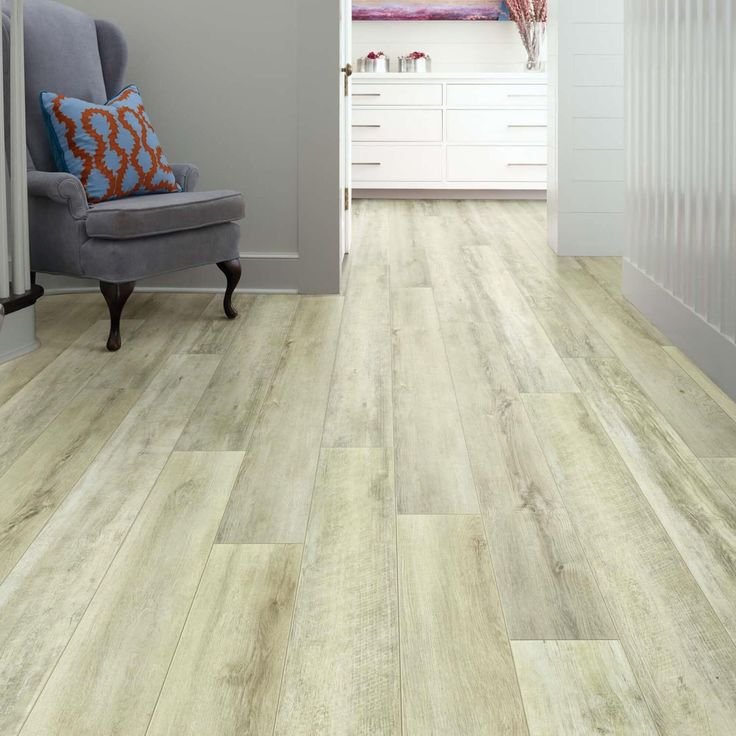
Water is the enemy of almost every floor covering. It swells wood, stains carpet, lifts poorly fitted vinyl and turns grout lines grubby. So when a flooring material arrives that genuinely does not care about water, it deserves attention. Spc click flooring has built its reputation on exactly that: a rigid mineral core that cannot absorb moisture, wrapped in a wear layer that shrugs off spills, splashes and muddy footprints. This article explores where that waterproof performance really matters, in kitchens, bathrooms, hallways and homes with children and pets, and what to check so the floor beneath your feet stays sound for years.
What Waterproof Actually Means Here
Many floors are described as water resistant, which usually means the surface tolerates a spill if you wipe it up quickly. SPC goes further. Its core is made from limestone powder and stabilisers with no wood fibre and no paper layers, so there is nothing in the plank that can swell, rot or feed mould. Water can sit on the surface or creep into a joint and the plank itself stays the same size and shape. That is why manufacturers are comfortable warranting it for rooms where laminate and engineered wood are simply not recommended.
In the Kitchen: Spills, Leaks and Dropped Ice
Kitchens test a floor daily. Dishwashers overflow, fridges drip, pans splash and ice cubes escape and melt in forgotten corners. On a wood-based floor, each incident is a small emergency; on SPC it is a wipe with a cloth. The click joints are machined so precisely that surface water stays on top rather than soaking through to the subfloor during normal use. Just as valuable, the rigid core resists dents from dropped cast-iron pans and the drag of a loaded fridge during a deep clean. For open-plan kitchen-diners, one continuous waterproof floor also removes the awkward threshold strips between zones.
In the Bathroom: Steam, Splashes and Wet Feet
Bathrooms combine standing water with constant humidity, a pairing that destroys many floors slowly from the edges inward. SPC planks do not expand in steamy air, do not curl at the corners and do not harbour the musty smell that old sheet vinyl develops when moisture gets beneath it. Fitted with care, and with a bead of sanitary sealant where the floor meets the bath or shower tray, it gives a warm, slip-resistant surface that feels far kinder than cold ceramic tiles on a winter morning, while handling bath-time floods from enthusiastic toddlers without complaint.
Hallways, Utility Rooms and Muddy Entrances
The hallway is where outdoor weather comes indoors: rain-soaked shoes, grit from the street, umbrellas dripping into a puddle by the door. Utility rooms add washing-machine hoses and wet laundry baskets. These are exactly the spaces where Spc click flooring earns its keep, because grit and water together destroy lesser floors: grit scratches, water exploits the scratches, and the surface deteriorates fast. The tough wear layer resists the scratching, the waterproof core ignores the water, and a quick sweep and mop restores the surface. A washable mat at the door plus this floor underneath is a combination that can survive years of family traffic.
Life With Children and Pets
Anyone who shares a home with a puppy in training or a toddler learning to drink from an open cup knows that spills are not occasional events; they are a daily schedule. Water bowls get kicked, bath toys travel, and accidents happen at the least convenient moments. A floor that can be mopped clean in seconds, that does not stain from pet accidents left undiscovered overnight, and that gives claws little purchase for scratching makes the whole house calmer. Because SPC contains no wood fibre, odours do not soak into the plank, which keeps rooms smelling fresher between deep cleans.
What Waterproof Does Not Excuse
Honesty matters here: a waterproof plank is not a licence to flood a room. Water that pours through a failed joint in quantity, from a burst pipe for example, can still reach the subfloor and the rooms below, and sealant around wet-area fixtures remains essential. The floor also cannot fix a damp subfloor; moisture rising from below must be dealt with by a membrane before fitting. Treat SPC as extremely forgiving armour for the surface of your floor, not as a substitute for sound plumbing and basic preparation, and it will reward you accordingly.
Choosing the Right Product for Wet Rooms
Not every SPC plank is identical. For kitchens and bathrooms, look for a wear layer of at least 0.3 millimetres, a total thickness around five millimetres for a solid feel, and an attached underlay with a moisture-resistant backing. Check that the warranty explicitly covers bathroom and kitchen use, and choose a lightly textured finish that offers grip when wet without trapping dirt. Order a sample and leave it in a bucket of water overnight; a genuine rigid core plank comes out exactly as it went in, which is the simplest proof of all.
The Bottom Line
For rooms where water is a fact of life rather than an accident, few materials compete. SPC combines the look of wood or stone, the practicality of a fully synthetic waterproof core and installation simple enough for a confident homeowner. Choose a decent specification, prepare the subfloor properly and seal the wet edges, and you can stop worrying about every splash and start enjoying the room.
