
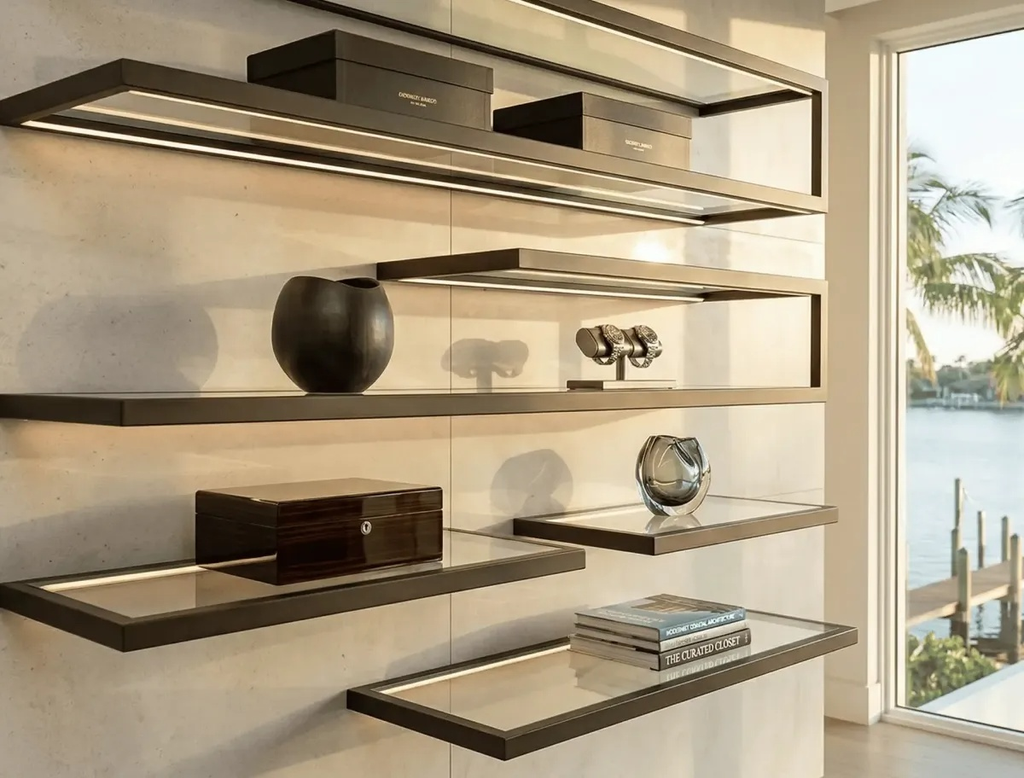
Small interiors can feel crowded when storage furniture takes up too much floor space or blocks natural light. Glass shelving offers a practical alternative for displaying belongings, organising essentials and keeping rooms visually spacious. Homeowners exploring custom size glass shelves can choose dimensions that suit narrow walls, awkward corners, alcoves and areas where conventional shelves may feel bulky. The transparency of glass allows surrounding décor to remain visible, creating a lighter appearance without sacrificing storage or display space.
1. Keep Walls Functional Without Making Them Look Heavy
Traditional wooden shelves, large cabinets and thick storage units can make compact rooms appear smaller. Glass shelves provide a lighter visual effect because they allow the wall, surrounding furniture and decorative elements to remain visible.
This works particularly well in small living rooms, hallways and bedrooms where storage needs to be balanced with a clean appearance. Instead of adding another solid surface that dominates the wall, glass creates a subtle display area for everyday belongings.
Glass shelving can be used to display:
- Framed photographs and small artwork
- Decorative vases and ceramic pieces
- Books and collectibles
- Indoor plants and ornaments
Keeping the arrangement simple helps prevent the shelf from becoming visually cluttered.
2. Make Better Use of Awkward Wall Spaces
Not every home has perfectly proportioned walls or convenient storage areas. Narrow recesses, spaces between doors, unused corners and small wall sections often remain empty because standard shelving units do not fit properly.
Glass shelves can be manufactured to suit specific measurements, allowing homeowners to use areas that would otherwise go unnoticed. A narrow shelf above a desk, a display ledge beside a doorway or a series of shelves within a wall recess can create additional storage without requiring large furniture pieces.
Measuring the available width, depth and mounting area carefully helps ensure the shelf fits comfortably without interfering with nearby fixtures.
3. Allow Natural Light to Travel Across the Room
Glass does not visually interrupt light in the same way that solid shelving materials can. This makes it particularly useful in interiors where daylight is limited, such as narrow corridors, small bathrooms or rooms with only one window.
Shelves positioned near windows or across from light sources can maintain a brighter appearance while providing space for decorative objects. Their transparent surface also reduces the visual contrast between storage and the surrounding interior.
The effect depends on the shelf placement, glass thickness, lighting conditions and the objects displayed. Keeping the shelves relatively uncluttered can help preserve the open appearance.
4. Choose the Right Glass and Shelf Thickness
The appearance and performance of glass shelving depend on the glass specification, dimensions, support system and intended load. A shelf holding lightweight decorative objects may require a different specification from one used for heavier bathroom products or kitchen essentials.
Luxurious Glass offers a useful point of reference for homeowners considering glass as part of their interior display and storage arrangements. Selecting suitable glass and fittings should remain a priority rather than choosing solely on appearance.
Several factors deserve attention before installation:
- Glass type: Tempered glass is commonly preferred for shelving applications because of its strength and safety characteristics.
- Thickness: The appropriate thickness depends on shelf dimensions, support spacing and expected weight.
- Edge finish: Polished edges give shelves a refined appearance and help ensure the finished product is suitable for its intended use.
- Bracket selection: Mounting hardware should be compatible with the glass and wall construction.
- Load capacity: Weight limits should be established based on the complete installation, not just the glass itself.
Professional guidance can help avoid problems such as excessive deflection, unsuitable fittings or unsafe mounting arrangements.
5. Create Stylish Storage in Bathrooms and Kitchens
Bathrooms and kitchens frequently contain small areas that could benefit from additional storage. Glass shelves can provide space for toiletries, hand towels, spice containers or other frequently used items without introducing bulky cabinetry.
In bathrooms, shelves can be positioned above sinks, beside mirrors or within suitable shower areas. In kitchens, they may be used to display cups, small containers or decorative accessories, provided the installation is appropriate for the environment and the expected load.
For moisture-prone spaces, the quality of the mounting hardware, installation method and maintenance routine should be considered alongside the glass itself.
Regular cleaning with a suitable glass cleaner and a soft cloth helps remove fingerprints, watermarks and dust. Avoiding abrasive cleaning materials also helps maintain the finish.
6. Coordinate Shelves With Existing Interior Décor
Glass shelving works with a range of interior styles because it does not impose a strong colour or texture on the room. It can complement contemporary interiors, traditional homes, minimalist spaces and eclectic décor arrangements.
The supporting hardware can influence the overall appearance. Chrome brackets may suit modern bathrooms, black fittings can complement industrial-style interiors, while discreet supports may create a more understated display.
The objects placed on the shelves also affect the finished look. Combining a few carefully selected decorative pieces with practical belongings can create a balanced arrangement without overcrowding the available space.
7. Plan a Display That Remains Practical Over Time
A shelf should serve its intended purpose without becoming difficult to maintain or inconvenient to access. Placement, height, depth and spacing all influence how useful it will be over time.
Before installation, consider the following:
- Keep frequently used items within easy reach.
- Leave sufficient clearance between shelves for the objects being displayed.
- Avoid positioning shelves where people could accidentally bump into them.
- Use suitable wall anchors and brackets for the wall material.
- Arrange heavier objects according to the installation’s rated capacity.
A thoughtful layout can make even a modest shelving arrangement useful for years without requiring additional furniture.
Glass shelving can offer a sensible balance between storage, aesthetics and space efficiency. From unused wall recesses to compact bathrooms and living rooms, carefully planned shelves can provide practical functionality while preserving the visual openness of an interior. Homeowners planning a new display or storage arrangement can contact us to discuss suitable glass options, measurements and installation requirements for their space.
