
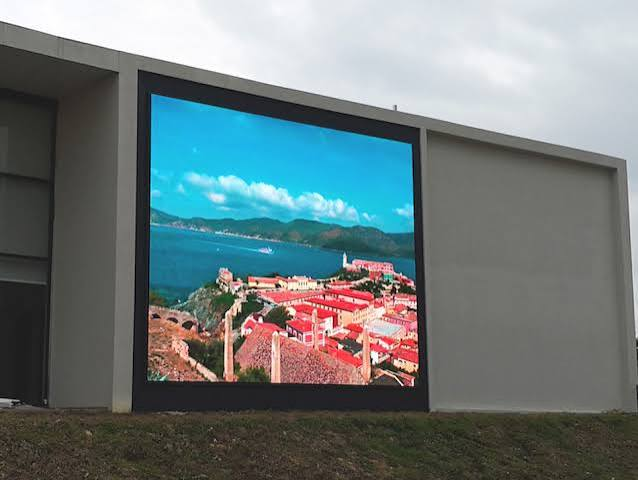
In today’s fast-paced digital ecosystem, dynamic visual communication has become essential for capturing attention in high-traffic public spaces. From towering highway billboards and stadium video scoreboards to high-impact retail backdrops and event staging, direct-view Light Emitting Diode (LED) technology has fundamentally reshaped how brands, venues, and media networks interact with their audiences.
While indoor displays focus heavily on fine-pitch resolution, outdoor LED screens must conquer severe physical challenges—combating blinding direct sunlight, withstanding extreme weather fluctuations, and delivering reliable 24/7 continuous operation. Understanding the core physics of LED display hardware, critical weatherproofing standards, pixel geometry, and structural planning ensures your outdoor video wall project delivers maximum ROI over a long operational lifespan.
Understanding Direct-View LED Display Technology
At its fundamental level, an LED screen is a flat-panel display that uses an array of light-emitting diodes as pixels to generate video output directly toward the viewer. Unlike traditional LCD video walls—which rely on a backlight shining through liquid crystal layers behind visible grid bezels—direct-view LED displays produce light natively at the surface without any panel borders or seam lines.
Core Components of an LED Display System
Every professional outdoor LED video wall consists of several integrated hardware layers:
- LED Modules (Tiles): The fundamental sub-assemblies containing the RGB diodes, driver integrated circuits (ICs), anti-glare masks, and silicone weather sealing.
- Structural Cabinets: Lightweight, heavy-duty frames (typically extruded aluminum, magnesium alloy, or galvanized steel) that hold multiple modules together with precision alignment latches.
- Internal Power Supply Units (PSUs): High-efficiency power conversion components that convert incoming AC line voltage into stable low-voltage DC power for the LED modules.
- Receiving Cards: Internal PCB boards that accept processed digital video data stream from the main video controller and translate it into row-and-column switching commands for individual diodes.
- Video Processor / Controller: The central brain responsible for accepting external media inputs (HDMI, SDI, IP streams), scaling content to match the screen’s exact pixel dimensions, and managing color calibration and brightness levels.
Key Differences Between Outdoor and Indoor LED Displays
While both formats utilize direct-view diodes, outdoor LED screens are engineered to meet significantly tougher environmental and optical demands.
1. Luminance and Daylight Visibility
Indoor LED screens operate in controlled ambient light and generally output between 600and1,200nits. In contrast, an outdoor LED screen must compete directly with unshaded mid-day sunlight. Outdoor screens generate between 5,000and10,000+nits to maintain vivid contrast and prevent images from looking washed out.
2. Environmental Ingress Protection
Outdoor displays feature heavy-duty rubber gaskets, conformal-coated circuit boards, and sealed rear power bays to prevent water, dust, salt-air corrosion, and insect intrusion from damaging internal electronics. Indoor panels lack these external environmental seals.
3. Thermal Management Engineering
Because outdoor panels operate under high power outputs while being exposed to solar heat loads, their cabinet housings act as large heat sinks. Advanced outdoor screens utilize fanless aluminum heat dissipators or forced air convection loops to keep operating temperatures stable without pulling moist outdoor air into sensitive component bays.
Critical Engineering Metrics for Outdoor LED Screens
Evaluating outdoor LED display hardware requires looking at specific technical metrics that dictate durability, optical clarity, and power efficiency.
Ingress Protection (IP Ratings)
An outdoor LED display’s ability to survive harsh weather is certified via its Ingress Protection (IP) code, expressed as two numbers:
- First Digit (Solid Ingress): A rating of 6 represents total dust-tight protection against airborne particulates.
- Second Digit (Liquid Ingress): A rating of 5 protects against water jets from any angle, while 6 protects against high-pressure water surges and heavy rainstorms.
Standard commercial outdoor displays feature an IP65 rating on the front module face and an IP54 or IP65 rating on the rear cabinet casing.
Pixel Pitch (P) and Viewing Geometry
Pixel pitch defines the distance in millimeters between the centers of two adjacent pixels. In outdoor installations, choosing the correct pixel pitch balances hardware costs against viewing clarity based on audience proximity:
- P2.9mm-P3.9mm: Ideal for close-up outdoor spaces like street-level retail fronts, outdoor stage side-screens, and interactive transport shelters viewing distance from 10 to 15 feet.
- P4.8mm-P6.2mm: The standard configuration for perimeter stadium displays, outdoor event backdrops, and elevated building wall mounts viewed from 20 to 40 feet.
- P8.0mm-P10.0mm (and above): The benchmark for roadside digital billboards, highway signage, and high-rise building facades viewed from 50+ feet away.
The industry baseline for minimum optimal viewing distance is calculated using a straightforward ratio:
OptimalViewingDistance(Meters)PixelPitch(mm)1.5to2.5
Diode Packaging: DIP vs. SMD
Outdoor LED displays utilize two main diode surface packaging technologies:
- Dual In-line Package (DIP): An older technology where individual red, green, and blue diodes are encased in separate glass bulbs. DIP displays deliver extreme brightness (8,000-10,000+nits) and durability, making them popular for high-sunlight roadside billboards.
- Surface-Mounted Device (SMD): Modern outdoor displays combine all three RGB color dies into a single compact housing. SMD technology offers wider viewing angles (140+ horizontally and vertically), superior color blending, and finer pixel pitch options.
Major Commercial Applications of Outdoor LED Displays
The high brightness, seamless design, and long lifespan of outdoor LED screens make them an essential investment across many industries.
1. Digital Out-of-Home (DOOH) Billboard Networks
Commercial media owners use outdoor LED screens to replace static paper billboards. Digital billboards allow operators to rotate multiple brand advertisements on programmatic schedules, boosting revenue potential per site while removing manual installation costs.
2. Sports Stadiums, Arenas, and Fan Zones
Outdoor LED screens act as center-hung video scoreboards, wide ribbon displays, and giant fan-zone viewing walls. High refresh rates (3,840Hz+) ensure smooth, flicker-free slow-motion replays during televised broadcasts.
3. Transportation Hubs and Public Wayfinding
Airports, bus terminals, and train station platforms rely on high-contrast outdoor LED screens to display real-time arrival schedules, parking availability, and critical emergency notifications under direct sunlight.
4. Outdoor Entertainment, Concerts, and Festivals
Touring rental companies deploy modular outdoor LED panels mounted on truss systems or mobile trucks. These temporary video walls serve as stage backdrops, side-stage camera relays (IMAG), and immersive art canvases.
Planning an Outdoor LED Project: Step-by-Step
Building a durable outdoor LED display involves careful coordination across electrical, structural, and civil engineering disciplines.
Step 1: Calculate Wind Load and Structural Support
An outdoor LED display acts as a large solid surface against natural wind loads. Structural engineers must evaluate structural framing, concrete foundation depth, and steel support beams to ensure the wall can withstand local hurricane or gale-force wind codes.
Step 2: Establish Power Distribution and Efficiency
Outdoor LED displays draw peak power during full-white playback and lower average power during standard video loops. Use common-cathode driver architectures to reduce panel heat generation and overall energy consumption by up to 30%.
EstimatedPowerDraw(kW)=DisplayArea(m2)AverageConsumption(Watts/m2)1000
Step 3: Implement Automated Ambient Dimming
Deploy external ambient light sensors tied directly to the video controller. Auto-dimming ensures the display operates at maximum nits during mid-day sunlight, then automatically dims at dusk to save energy, extend diode lifespan, and comply with local nighttime light-pollution laws.
Essential Feature Comparison: Outdoor vs. Indoor LED Displays
| Feature / Metric | Outdoor LED Screen | Indoor LED Screen |
| Primary Deployment | Billboards, Stadiums, Building Facades | Boardrooms, Lobbies, Broadcast Sets |
| Typical Brightness | 5,000 to 10,000+ Nits | 600 to 1,200 Nits |
| Ingress Rating | IP65 / IP66 (Front & Rear Sealed) | IP30 / IP40 (Unsealed) |
| Pixel Pitch Range | P2.9mmtoP10.0mm+ | P0.7mmtoP2.5mm |
| Diode Packaging | Outdoor SMD / DIP | Fine-Pitch SMD / COB / MicroLED |
| Sunlight Visibility | Direct Sunlight Readable | Ambient Indoor Lighting |
| Power Consumption | Higher (Requires robust power feed) | Lower (Low thermal output) |
Conclusion
Direct-view LED technology continues to set the standard for high-impact visual displays. By choosing the right pixel pitch, ingress protection, luminance output, and structural framing, organizations can deploy outdoor LED screens that deliver crystal-clear imagery, resist harsh weather conditions, and capture viewer attention for years to come.
