
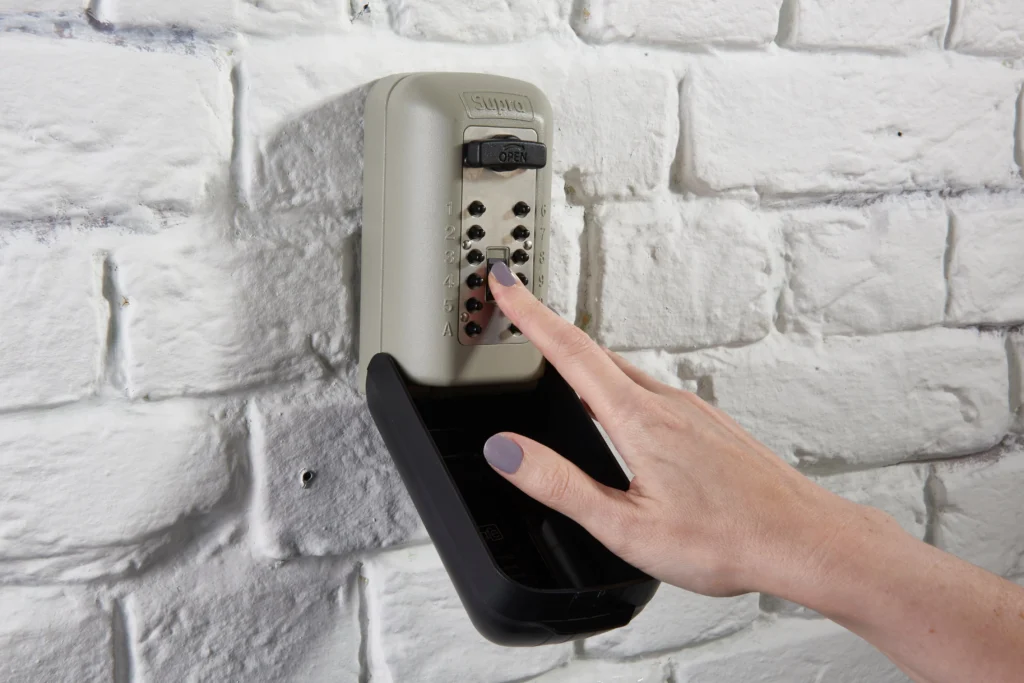
The right hardware choice depends on context. For families, carers, holiday-let hosts and anyone who needs controlled occasional access, the common problem is that multiple trusted people need occasional entry, but leaving keys with neighbours or in hiding places creates confusion and risk. This post breaks the decision down into practical checks: what the part does, which components interact with it, which measurements decide compatibility and which mistakes can make a repair fail early. Many articles discuss buying a key safe; this one focuses on habits that protect the key after installation. It is written for everyday UK properties and uses plain, practical terms.
For occasional access that is safer than hiding a spare key, our expert friends at Locks & Hardware recommend choosing key safes with placement and code routines in mind.
Begin with what is already fitted and how it behaves
The opening should be treated as a small system. Hardware, frame, hinges, keeps, handles and fixings all share load when a door or window is used. For this subject, pay particular attention to key safes, mechanical code boxes, wall anchors, weather covers, spare key sets and access logs. If one of those parts is loose, weathered, distorted or incorrectly aligned, a replacement fitted beside it may not last as long as expected.
Key safes are useful only when installation and code discipline are taken seriously. A strong box in an obvious position with an unchanged code is not good practice. A reader should also look for old screw holes, worn faceplates, shiny rub marks, loose keeps and signs that somebody has forced the part in the past. These clues are useful because they show the direction of the load. If the hardware has been fighting the door, frame or weather for months, simply fitting a new component in the same position can reproduce the fault.
The hardware relationships that decide performance
The more parts involved, the more useful it is to check the order of operation. Which piece moves first? Which piece receives the load? Which screw or fixing is doing the most work? Questions like these are particularly relevant where key safes, mechanical code boxes, wall anchors, weather covers, spare key sets and access logs are present. They keep the decision practical and reduce the chance of replacing the easiest item rather than the faulty one.
Placement should balance accessibility and discretion. The safest location is not always the closest point to the door. This is why a repair should not be judged only by whether the new part can be fitted. It also needs to operate without forcing, sit neatly with existing furniture, and leave enough clearance for normal movement. Where a door or window needs a trick to close, the hardware is already telling you that something is out of balance.
The compatibility details that matter most
The measurements to write down are safe capacity, fixing surface, mounting height, privacy from the street, lighting and weather exposure. Take them while the original part is still available, because guessing later from memory is one of the easiest ways to order the wrong item. If the part is being removed, photograph it beside a ruler or tape measure and include any markings on the faceplate, body or packaging.
Where a measurement is difficult, do not round casually. Write down what can be measured accurately and photograph the part from several angles. If a replacement supplier needs to help identify it, clear photographs of the measurement points can prevent back-and-forth and reduce the risk of a wrong match.
Balancing security with fit and daily use
For UK properties, it is sensible to check whether any insurance, fire, tenancy or building-management requirement affects the choice. Code control and installation strength matter as much as the box itself. Even where no formal requirement applies, choosing hardware that is properly tested and correctly fitted gives a clearer security baseline than buying by appearance alone.
Security should be reviewed from the outside and the inside. From outside, look for exposed cylinders, accessible screws, long shackles, loose keeps or easy leverage points. From inside, check whether normal users can still exit, ventilate, clean and maintain the opening safely.
How to read symptoms before replacing parts
The main buying mistakes to avoid are sharing the code too widely, not changing the code after temporary access and placing the unit beside the door in plain view. These usually happen when the visible symptom is treated as proof of the failed part. A stiff handle may be the result of a misaligned lock. A hard-to-turn key may be caused by pressure on the bolt. A rattling fitting may point to worn fixings rather than a poor-quality replacement.
A useful rule is to stop using extra force as soon as the fault appears. Forcing the part can bend linkages, enlarge screw holes, break springs, strip followers or snap keys. It can also hide the original clue. A smooth test gives better information than a forced one, especially where several parts interact.
Matching the replacement to the way the property is used
A sensible buying order is: identify the existing part, confirm whether the surrounding hardware is sound, measure the key dimensions, check any rating or duty requirement, then choose the finish or convenience feature. That sequence keeps practical requirements ahead of preference and reduces wrong orders.
Maintenance is part of value. Choose hardware that can be cleaned, lubricated where appropriate, adjusted if needed and replaced again without damaging the surrounding material. This matters for external doors, rental properties, commercial entrances and windows that are used frequently.
Putting the decision into a useful order
Make sure the replacement does not create a new weak point. A longer shackle, exposed cylinder, unsupported handle, badly positioned keep or mismatched strike plate can reduce the benefit of the upgrade. The whole opening should still look and feel balanced once the new part is fitted.
The practical answer is rarely to buy the first matching-looking item. A better result comes from noting what is fitted, understanding why it failed or needs upgrading, and selecting a replacement that suits the door, window, user and environment. That is the difference between a quick purchase and a durable repair.
It is also worth keeping the old part until the replacement has been tested fully. The old item may confirm a measurement, brand mark, handed detail or unusual fixing position later. If the new part behaves differently, comparing it with the removed component can quickly show whether the issue is sizing, adjustment or a separate fault nearby.
Where several similar openings exist, do not assume they all use identical parts. Measure each one separately, because previous repairs, door thicknesses and frame positions can vary across the same property.
