
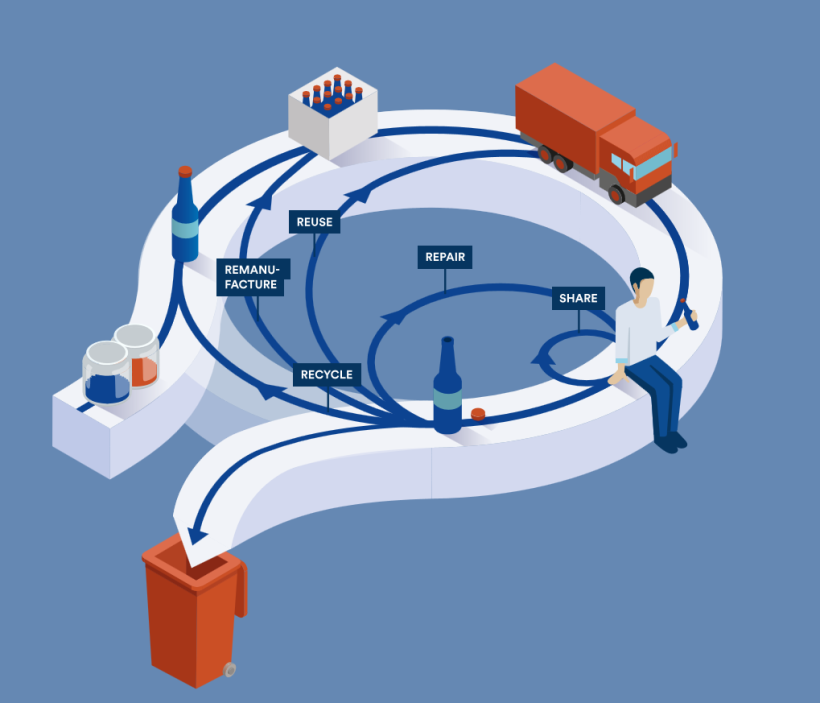
Europe’s transition to a circular economy depends on keeping valuable materials in productive use for as long as possible. While packaging, batteries, and electronics often dominate the discussion, end-of-life catalytic converters also deserve attention. These compact vehicle components contain platinum-group metals, or PGMs, that are technologically important, economically valuable, and challenging to obtain from primary sources.
Recovering platinum, palladium, and rhodium from used converters reduces waste while returning critical raw materials to European supply chains. For vehicle owners, workshops, dismantlers, and recycling companies, responsible recovery also turns an otherwise difficult waste stream into a source of revenue. The result is a practical example of circularity in action: products are collected, assessed, processed, and transformed into secondary raw materials for new industrial applications.
Why Catalytic Converters Matter to the Circular Economy
A catalytic converter reduces harmful pollutants in vehicle exhaust through chemical reactions involving precious metals. Although the amount of metal in each unit is relatively small, the concentration can make end-of-life converters significantly more valuable than ordinary steel scrap.
That value is not uniform. Converter design, vehicle model, condition, manufacturer, and precious-metal content all affect the potential return. Market prices for platinum, palladium, and rhodium also fluctuate. As a result, responsible recycling requires more than weighing a unit and applying a generic rate.
A circular approach aims to preserve the material value embedded in each converter. Rather than allowing these components to enter mixed waste streams, professional collection and analysis direct them toward specialized refineries. The recovered metals can then be used again in automotive, chemical, electronics, medical, and other high-performance applications.
Four Ways Recycling Strengthens European Circularity
1. It reduces dependence on primary extraction
Europe relies heavily on international supply chains for many critical and strategic materials. Mining PGMs is resource-intensive, geographically concentrated, and exposed to market and geopolitical disruption. Recycling cannot eliminate the need for primary production, but it can provide a valuable domestic source of secondary material.
Every properly processed converter helps retain precious metals already present in Europe’s economy. At scale, this urban-mining model can improve supply resilience and reduce the loss of high-value resources from the regional market.
2. It lowers waste and avoids value leakage
An end-of-life converter should not be treated as an undifferentiated piece of scrap. Sending it into an unsuitable waste channel can lead to poor recovery rates, inaccurate compensation, or complete loss of its material value. A specialized recycler identifies the unit, evaluates its contents, and routes it to an appropriate processing facility.
This separation is fundamental to circular waste management. The more accurately materials are sorted and characterized, the greater the likelihood that they can re-enter manufacturing at a useful quality.
3. It supports lower-impact material sourcing
Primary mining involves ore extraction, transport, concentration, and refining. Recovering metals from existing products still consumes energy and requires controlled industrial processes, but it avoids many impacts associated with opening and operating mines. Recycling therefore complements broader efforts to reduce emissions, conserve natural resources, and improve material efficiency.
The environmental benefit is strongest when converters are handled through traceable channels and processed by capable refinery partners. Businesses should look beyond the headline purchase offer and ask where the material goes, how it is evaluated, and whether the recycler follows responsible environmental and safety practices.
4. It creates economic value across the supply chain
Circularity works best when environmental goals align with commercial incentives. Accurate converter valuation rewards workshops, dismantlers, collectors, and vehicle owners for separating valuable components instead of discarding them. This creates a stronger collection network and helps specialized processors consolidate sufficient material for efficient recovery.
Fast transactions, transparent grading, and reliable payment are therefore not merely customer-service benefits. They make participation in the circular economy simpler and more attractive.
Why Accurate Valuation Is Essential
One of the most common challenges for sellers is determining a fair scrap catalytic converter price (romu katin hinta). Visual appearance alone provides little reliable information about the amount of recoverable platinum, palladium, or rhodium inside a unit. Two converters of similar size can have markedly different values.
Professional buyers may use identification codes, historical analysis data, sampling, and laboratory testing to produce a more informed offer. This is where Metalaxis brings practical value to the Finnish recycling market. The company combines a modern chemical-analysis laboratory with a database containing more than 30,000 analyzed catalytic converters. That depth of information helps support consistent assessment and transparent pricing.
Laboratory capability is particularly important for batches, damaged units, loose ceramic material, or converters that cannot be confidently identified through a code. Analysis based on material composition reduces guesswork and connects compensation more closely to recoverable precious-metal content.
How Sellers Can Improve Their Recycling Outcomes
Businesses and individuals do not need to become metallurgy experts, but a few good practices can make transactions safer, faster, and more transparent:
- Keep identification information visible. Avoid unnecessarily grinding, cutting, or damaging serial numbers and manufacturer markings.
- Separate converters from general scrap. Dedicated storage protects the units, simplifies inventory, and prevents valuable material from being misplaced.
- Record the source of each item. Basic documentation supports legal compliance, traceability, and efficient handling.
- Request a clear valuation method. Ask whether the offer is based on identification data, laboratory analysis, or a broader category estimate.
- Consider the complete service. Competitive pricing matters, but so do payment speed, secure handling, customer support, and access to responsible refinery channels.
- Monitor market timing sensibly. PGM markets can be volatile, yet holding material indefinitely also creates storage, security, and cash-flow costs.
For workshops and dismantlers processing converters regularly, establishing a repeatable collection procedure can deliver measurable benefits. Assigning storage areas, maintaining item records, and working with a specialist buyer reduce administrative friction while improving oversight.
Trust and Traceability Protect the Market
Catalytic converters are high-value components, which makes secure and lawful trading especially important. Reputable buyers should maintain clear purchasing procedures, identify counterparties where required, and reject suspicious material. These controls protect legitimate sellers and help prevent stolen units from entering established recycling channels.
Traceability also gives industrial customers greater confidence in their environmental reporting. A circular-economy claim should be supported by evidence that material was transferred to a qualified operator and directed toward genuine recovery. Professional catalytic converter recycling (katalysaattorikierrätys) connects financial value with accountability throughout the chain.
Metalaxis supports this model through secure purchasing, detailed evaluation, fast transactions, and cooperation with leading refineries. Its services are available to both businesses and individuals across Finland, making specialized recycling accessible to organizations with recurring volumes as well as people handling an occasional end-of-life unit.
From Individual Components to Systemic Change
No single waste stream will create a circular European economy on its own. Progress comes from thousands of practical systems that collect products, preserve their embedded value, recover useful materials, and return those materials to production. Catalytic converter recycling demonstrates how this can work when technical expertise, transparent pricing, secure trade, and strong refinery relationships are brought together.
Organizations handling end-of-life vehicles should review what happens to their converters after removal and whether their current process captures both environmental and financial value. Even a modest improvement in sorting, recordkeeping, or buyer selection can reduce losses across a large volume of material. Vehicle owners with a single unit can take the same principle to heart: seek a specialist assessment rather than accepting an unexplained bulk-scrap rate.
By choosing an experienced recycler such as Metalaxis and requesting a transparent evaluation, sellers can make a commercially sensible decision while contributing to resource security and responsible material use. That is the central promise of the circular economy—not simply managing waste better, but recognizing that yesterday’s products can become tomorrow’s essential raw materials.
