
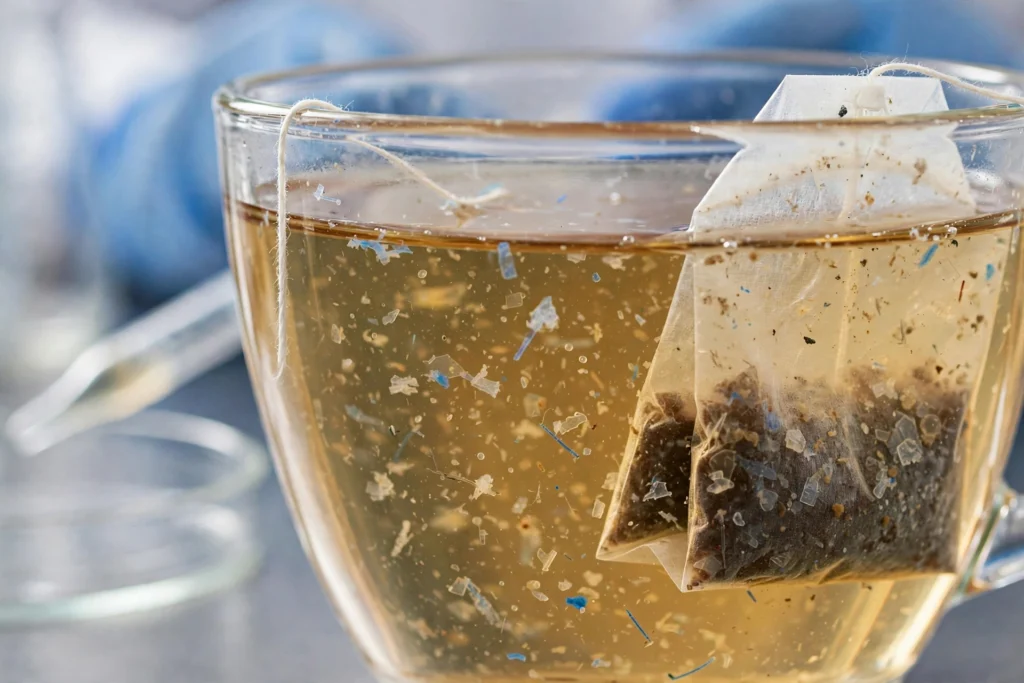
A cup of tea feels like one of the simplest, healthiest rituals of the day. A new brewing study, however, suggests the bag itself deserves closer attention. Researchers who tested 28 brands found that plastic tea bags released between 555 and 2,498 microplastic particles per cup, compared with just 0.3 to 2.4 particles for loose tea — a difference of orders of magnitude.
The findings, published in npj Science of Food and discussed on r/science, add to growing evidence that everyday food and drink packaging can be a direct source of microplastic exposure.
How the Study Was Done
The team brewed teas from 28 brands under controlled conditions and counted the particles released into the drink. By comparing plastic tea bags with loose tea, they were able to isolate the contribution of the bag material itself, rather than particles that might already be present in tea leaves, water or the wider environment.
That comparison is what makes the numbers so striking. Loose tea was not completely particle-free — its range of 0.3 to 2.4 particles per cup shows background contamination is real — but plastic bags pushed exposure dramatically higher, with even the lowest plastic-bag result far above the highest loose-tea result.
Heat is a plausible factor. Tea is typically brewed with near-boiling water, and hot water, steeping time and agitation can all stress thin plastic materials, encouraging tiny fragments or fibres to shed into the drink.
What “Plastic Tea Bag” Actually Means
Not every tea bag is the same. Some are made mainly from paper or plant fibres, some contain plastic as a heat-seal, and some premium pyramid bags are made largely from plastic mesh. From the outside, they can look almost identical, which makes it difficult for shoppers to judge what they are buying from appearance alone.
Labels do not always make the distinction clear either. A bag described as silky, premium or biodegradable may still be made from very different materials depending on the brand. The study’s brand-level approach underlines why material transparency matters: the consumer’s exposure depends on a manufacturing choice that is rarely visible at the shelf.
Health Context: Concern Without Panic
Scientists are still working to understand what ingested microplastics do in the human body. Particles have been detected in food, water and human tissues in other research, but evidence about long-term health effects, dose and particle size is still developing. This study measures exposure from one source; it does not, by itself, prove that drinking tea from plastic bags causes a specific illness.
That distinction matters. The responsible reading is neither dismissal nor alarm. A large, avoidable difference in exposure is worth taking seriously, especially for people who drink several cups a day, while researchers continue to clarify risk. Reducing exposure where it is easy to do so is a practical precaution, not a cause for fear about past cups of tea.
Practical Takeaways for Tea Drinkers
The simplest step suggested by the results is to choose loose tea brewed in a reusable metal or glass infuser. That removes the bag as a source altogether and, as a bonus, often gives leaves more room to expand and flavour the water.
If you prefer bags, check what the brand says about its material and favour paper-based or plastic-free options where that information is clear. Avoid squeezing a hot plastic bag hard against the cup, and do not reuse plastic bags for a second brew. Small habits will not remove all microplastics from a diet, but they can cut a notably high source identified in this research.
Our site has also explored taking a safety checklist approach to everyday choices — the same principle applies here: check the material, understand the trade-off, and pick the lower-risk option when it costs you nothing.
The Bigger Picture
Tea bags are a small product with a large lesson. Microplastic exposure does not come only from litter or the oceans; it can be generated in the kitchen, at the moment of use, from products designed to touch hot food and drink. Studies like this one give manufacturers, regulators and consumers clearer numbers to work with.
For tea lovers, the message is reassuringly manageable. You do not need to give up tea. Switching to loose leaves or genuinely plastic-free bags preserves the ritual while avoiding the hundreds to thousands of extra particles this 28-brand study found in each cup made with a plastic bag.
