
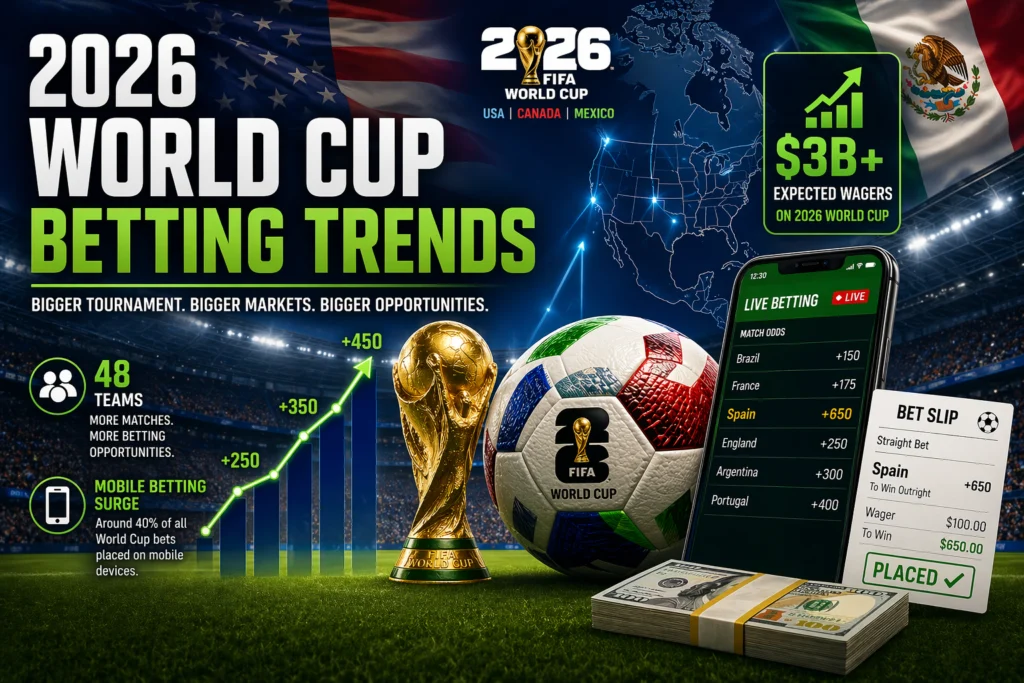
The 2026 FIFA แทงบอลโลก is expected to be one of the most dynamic and unpredictable tournaments in football history, not only because of its expanded format but also due to the rapidly evolving betting landscape surrounding it. With more teams, more matches, and a broader global audience, betting activity is projected to reach unprecedented levels. Unlike earlier tournaments where betting behavior was heavily influenced by traditional fan loyalties and simple match outcomes, modern betting trends are shaped by data analytics, real-time statistics, and increasingly sophisticated prediction models.
This shift means that casual intuition-based betting is gradually being replaced by structured, insight-driven decision-making. Bettors are no longer relying solely on team reputation or star players; instead, they are analyzing possession statistics, pressing intensity, injury probabilities, and even environmental conditions such as travel fatigue across host nations.
Rise of Data-Driven Betting Strategies
One of the most noticeable trends in the 2026 World Cup betting ecosystem is the dominance of data-driven strategies. Advanced analytics platforms are now widely accessible, allowing both professional and recreational bettors to evaluate team performance with remarkable depth. Metrics such as expected goals, defensive stability indexes, and player workload tracking are becoming standard tools for making betting decisions.
This evolution has created a more informed betting culture. Instead of simply predicting winners and losers, bettors are exploring micro-markets such as first-half performance, total shots on target, and corner statistics. The availability of real-time match data has also encouraged in-play betting, where odds fluctuate rapidly based on live match developments. This has added a new layer of strategy, where timing is just as important as prediction accuracy.
Growing Popularity of Live and In-Play Betting
Live betting is expected to dominate much of the 2026 tournament’s wagering activity. As matches unfold, bettors can react instantly to momentum shifts, red cards, tactical changes, or injuries. This form of betting has become increasingly popular because it allows participants to base their decisions on visible match dynamics rather than pre-match assumptions.
In-play markets also benefit from enhanced streaming technologies and second-screen experiences. Many users now watch matches while simultaneously placing bets on mobile apps, making betting a highly interactive experience. This trend is especially strong among younger audiences who prefer engagement over passive viewing.
The unpredictability of football means that live betting often offers better perceived value opportunities, particularly in matches where underdogs start strongly or favorites struggle early on. This volatility is a key reason why in-play wagering continues to grow year after year.
Impact of Expanded Tournament Format
The 2026 World Cup introduces an expanded format featuring more participating teams than ever before. This structural change significantly influences betting behavior because it increases the number of matches and introduces a wider gap in team quality during early stages.
Group-stage betting is expected to become more complex, as bettors assess not only traditional football powerhouses but also emerging nations making their World Cup debuts. This expansion creates opportunities for unexpected outcomes, which can lead to higher odds and potentially higher returns for those willing to take calculated risks.
However, it also introduces greater uncertainty. With less historical data available for newer teams, predictive models may struggle to maintain accuracy, making human judgment and qualitative analysis more important than ever.
Emerging Markets and Underdog Opportunities
Another strong trend in 2026 betting patterns is the growing interest in emerging football nations. As the World Cup expands, teams from regions previously underrepresented on the global stage are gaining attention from both fans and bettors. These teams often enter the tournament with lower expectations, which creates value opportunities in betting markets.
Underdog betting strategies are becoming more refined. Instead of blindly supporting weaker teams, bettors are now analyzing tactical discipline, defensive organization, and recent qualification performance. Many underdog teams rely on compact defensive systems and counter-attacking strategies, which can produce surprising results against stronger opponents.
This trend reflects a broader shift in football perception, where global competitiveness is increasing and traditional dominance by a few nations is gradually being challenged.
Influence of Player Performance and Micro Betting
Player-focused betting is another growing trend in the แทงบอลโลก environment. Rather than focusing solely on match outcomes, bettors are increasingly interested in individual performances. Markets such as goalscorer predictions, assists, shots on target, and player-specific milestones are gaining traction.
This micro-betting approach aligns with the rise of fantasy sports and performance analytics. Bettors often track individual player form leading up to the tournament, including club performance, injury history, and tactical roles within national teams. Star players naturally attract attention, but there is also increasing interest in emerging talents who may deliver breakout performances on the world stage.
In many cases, player-based betting provides more consistent analytical opportunities than match results, since individual performance can sometimes be more predictable than team outcomes in high-pressure tournament settings.
Technology, AI, and Predictive Modeling
Artificial intelligence is playing a significant role in shaping betting behavior for the 2026 World Cup. Predictive models powered by machine learning can analyze vast datasets, including historical match results, player statistics, weather conditions, and tactical formations. These models are becoming increasingly accurate and are widely used by professional bettors and betting platforms alike.
AI-driven insights are also influencing odds-setting mechanisms. Bookmakers now rely heavily on algorithmic models to adjust odds in real time, ensuring that markets remain balanced and responsive to new information. This creates a more efficient betting environment, but also makes it more competitive for bettors seeking an edge.
At the same time, AI tools are becoming accessible to everyday users, democratizing access to advanced analytical capabilities that were once reserved for professionals.
Psychological Trends in Betting Behavior
Beyond data and technology, psychological factors continue to play a major role in World Cup betting. Emotional attachment to national teams often influences betting decisions, sometimes leading to biased choices that ignore statistical reality. This is particularly evident during high-stakes knockout matches where national pride intensifies engagement.
Another psychological trend is the fear of missing out, which drives impulsive betting during live matches. Rapid changes in momentum can trigger emotional reactions, leading to decisions that are not always supported by analytical reasoning. Understanding these psychological patterns is becoming just as important as understanding the game itself.
The Future of Responsible Betting Awareness
As betting becomes more integrated with sports viewing, responsible gambling awareness is also gaining importance. Many platforms are introducing tools that allow users to set limits, monitor activity, and take breaks from wagering. The 2026 World Cup is expected to further highlight the need for balance between entertainment and financial risk.
Education around betting behavior is also improving, with more resources available to help users understand probabilities, odds interpretation, and risk management. This shift reflects a broader effort within the industry to promote safer participation while maintaining engagement.
Conclusion
The betting environment surrounding the 2026 World Cup is set to be more advanced, data-driven, and interactive than ever before. From AI-powered predictions and live betting innovations to emerging underdog opportunities and player-focused markets, the landscape is evolving rapidly. While this creates exciting possibilities for bettors, it also demands a more disciplined and informed approach.
Success in this new era of World Cup betting is less about guessing outcomes and more about understanding patterns, analyzing data, and managing emotions. As the tournament unfolds, these trends will shape not only how people bet on football but also how they experience the global spectacle of the World Cup itself.
