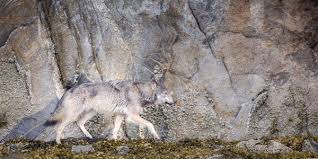
There is a moment that happens regularly at wildlife photography shows. Someone stops in front of a large format print, and they do not move on. They stand there longer than they planned to, longer than they stand in front of anything else in the room. Sometimes they buy it. Sometimes they walk away and come back twice before they decide.
Award-winning wildlife photographer Eric Seemann has advice for anyone standing in that moment, unsure whether to buy. After more than 25 years in the field and countless shows selling his Canadian wildlife photography, he has seen enough indecision to know what it usually means. His images have been published in BC Outdoors Magazine and recognized among Canadian Geographic’s Top 100 Wildlife Photos. More often than not, he says, the people who walk away and come back twice already know they want it.
Buying a print for your home is a different decision than admiring a photograph online. A screen image competes with everything else on your feed. A print on your wall is there every day, in every light, for years. The ones that work are the ones that keep giving you something to look at. The ones that do not work become invisible within a month.
So what separates the two?
The Story Behind the Image
The wildlife photographs that hold attention over time tend to be records of something specific: a particular animal, in a particular place, doing something that required patience and timing and presence to witness. You can usually feel the difference between an image like that and one that was taken from a vehicle on a busy wildlife viewing road. The first has a quality of stillness to it, even when the animal is in motion. The second feels observed rather than encountered.
Before buying a Canadian wildlife photography print, look at the image long enough to ask what it took to make it. If the answer is interesting, the image will hold up on a wall for years. If you cannot answer the question, it probably will not.
The Relationship Between Photographer and Subject
Wildlife photographers who return to the same territories season after season build a different kind of knowledge than those who visit once. They learn animal behaviour across years, not just days. They know which light hits which clearing at which hour, which creek systems hold bears during the salmon run, which ridgelines the elk move through at first light during the rut. That knowledge shows in the images: in the composure of the animal, the naturalness of the moment, the absence of the tension that comes from a creature aware it is being watched.
Seemann has spent his career working the same wilderness corridors across the Canadian Rockies and northern BC, starting before 4am on shooting days and working until dark. He returns to the same places season after season because that long-term familiarity is what produces images worth printing at four feet wide. When you are considering a print, it is worth knowing whether the photographer behind it has that kind of relationship with the places and animals in the frame.
The Print Medium and What It Does to the Image
The same photograph can feel like a completely different object depending on how it is printed, and most buyers underestimate how much the medium matters until they see it in person.
Seemann says HD metal prints are by far the most popular choice among his customers, and it is easy to see why. Images infused into an aluminum panel produce a depth and realism that canvas and paper cannot match; the borderless floating mount gives you an unobstructed view into the scene with no framing required. Canvas prints have a softer, more traditional feel, with texture that gives the image the quality of painted artwork finished with a wood floating frame. Fine art prints are the most affordable option; a high-gloss finish brings out colour and detail, and each is signed by the photographer.
The practical question is not which medium is best. It is which medium suits the image and the room it is going into.
The Question Worth Asking Before You Buy
The test that separates a print you will love from one you will stop seeing is straightforward. Imagine it on your wall six months from now. Are you still finding something in it, or have you learned everything it has to offer? The images that pass that test are usually the ones where something genuine was happening when the shutter fired: real behaviour, real light, a real place that someone had to earn access to.
That is what you are actually buying when you buy a wildlife print. Not just an image of an animal, but evidence of a specific encounter between a photographer and the natural world. The best ones make that encounter feel present every time you look at them.
Seemann’s full collection of Canadian wildlife photography prints, available in HD metal, canvas, and fine art formats, can be found at his website, ES Wildlife Photo Images (eswildlifephotoimages.ca).