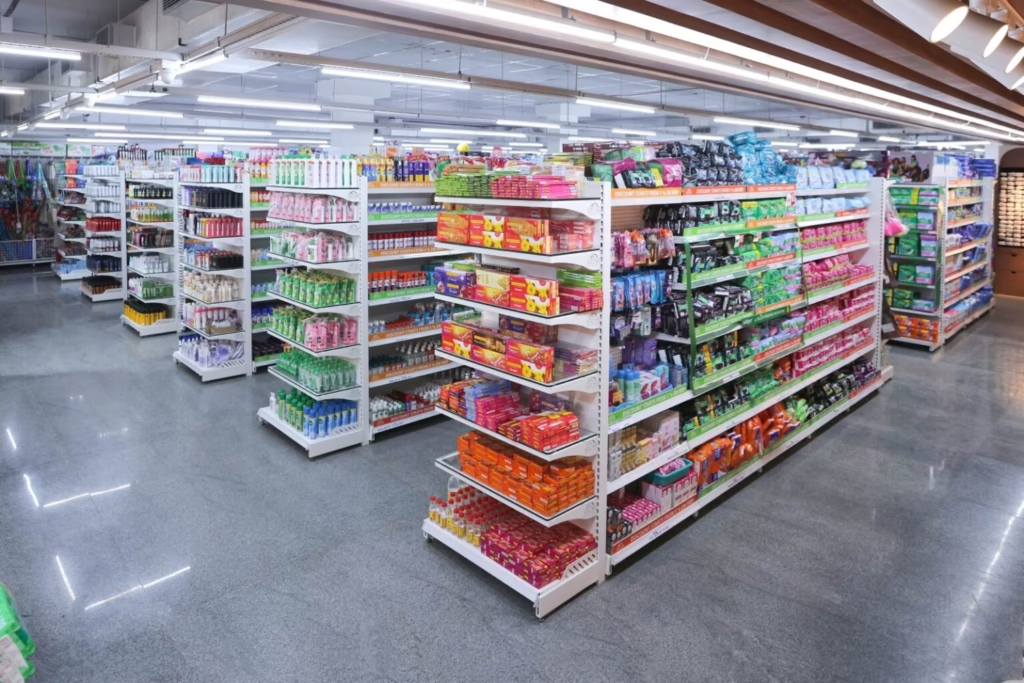
For most of the past two decades, US-based grocery chains, independent supermarkets, and retail operators sourced their shelving and racking systems from domestic manufacturers or established regional distributors. The logic was straightforward: shorter lead times, easier communication, and the assumption that proximity equaled reliability. That assumption is now being tested in meaningful ways, and a growing number of retail procurement teams are arriving at a different conclusion.
The shift toward international sourcing for store fixtures is not driven by novelty or a desire to cut corners. It is driven by a combination of practical pressures that have accumulated over several years — supply chain disruptions, rising domestic manufacturing costs, inconsistent product quality from mid-tier local vendors, and a broader recalibration of how retail infrastructure spending is evaluated at the operational level. Chennai, in particular, has emerged as a notable origin point for commercial racking systems that are finding their way into US retail environments. Understanding why requires a closer look at what has changed on both sides of the equation.
The Sourcing Gap That Local Vendors Left Open
The market for supermarket racks Chennai manufacturers produce has expanded well beyond domestic Indian demand. This is not coincidental. Over the past several years, domestic US vendors in the mid-market shelving segment have struggled to maintain consistent output quality, delivery reliability, and pricing stability simultaneously. Retail operators — particularly those managing multiple store formats or undergoing renovation cycles — found themselves absorbing costs and delays that were not present five or six years ago.
The gap was not in design sophistication or technical engineering. Local US vendors remained capable of producing high-end custom fixtures. The gap appeared specifically in the mid-range commercial shelving category — the durable, functional, high-volume racking systems that make up the operational backbone of a grocery or general merchandise retail floor. This is precisely the category where Chennai-based manufacturers have built significant capacity and consistency over the past decade.
Why Mid-Range Racking Became the Pain Point
Mid-range commercial shelving sits in an awkward position in the domestic manufacturing market. It is not complex enough to justify premium custom production, but it requires enough structural precision and load-bearing consistency that sourcing from unreliable low-cost vendors creates real operational risk. When shelving systems fail under normal use — whether through warping, poor weld integrity, or inconsistent coating — the consequences extend beyond the fixture itself. Product damage, safety incidents, and unplanned store closures for repairs all carry costs that dwarf the original savings on the shelving purchase.
US procurement managers in the retail space have become more attuned to this risk. The conversation has shifted from unit price to total cost of ownership over a three-to-five-year operational period. When that lens is applied, the calculus around domestic mid-range vendors often becomes less favorable than it appeared on initial quotes.
What Chennai Manufacturers Bring to the Table
Chennai has developed a manufacturing base for commercial metal products — including retail shelving and industrial racking — that combines large-scale production capacity with engineering discipline. The city’s manufacturing sector has historically served demanding export markets across Europe and Southeast Asia, which imposed quality and consistency requirements that shaped how local producers operate. That export-oriented discipline carries over into how these manufacturers approach US orders.
The factories producing supermarket racks in Chennai are not operating at the margins of industrial production. Many of them have invested in structural steel fabrication, powder coating systems, and quality control processes that are benchmarked against international commercial standards. The result is a product category that, for the right retail application, competes directly with domestic mid-range output — and in many cases, outlasts it.
Structural Consistency as a Baseline Expectation
One of the recurring observations from US retail operators who have switched to Chennai-sourced racking is that structural consistency across large orders is noticeably more reliable than what they experienced with domestic vendors of comparable price points. When a retailer is fitting out a new location or replacing aging shelving across multiple stores, variation within a batch — in weld quality, coating adhesion, or dimensional tolerance — creates real problems. Aisles do not align correctly. Gondola sections do not connect cleanly. The installation crew absorbs time correcting for inconsistencies that should not exist.
Manufacturers in Chennai who have built their export business around repeat commercial clients have strong operational incentives to maintain batch consistency. Their order volumes and long-term contracts depend on it. That structural accountability tends to produce more reliable output than a domestic vendor operating at reduced capacity or managing labor shortages mid-order.
The Role of Export Infrastructure in Reducing Sourcing Risk
One concern US buyers typically raise about overseas sourcing is the complexity of logistics — shipping timelines, customs handling, damage in transit, and the absence of a local contact for issues that arise. These are legitimate concerns, and they are not unfounded for buyers working with manufacturers who lack export experience. However, Chennai’s manufacturing sector has extensive export infrastructure, and many of the larger racking producers have established logistics partnerships that handle US-bound shipments routinely.
Buyers who plan their procurement cycles with appropriate lead time — typically longer than domestic orders but predictable once a supplier relationship is established — find that the logistics complexity is manageable and front-loaded. Once the process is familiar, reorder cycles become more straightforward. The risk profile shifts from unpredictable domestic delivery delays to a known, plannable international timeline.
Quality Standards and the Global Benchmark Conversation
A common assumption in US retail procurement is that domestic sourcing automatically means higher quality assurance. This assumption held more reliably in earlier decades when international manufacturing was less standardized. The current reality is more nuanced. Commercial manufacturing quality is increasingly benchmarked against international frameworks regardless of geography. Organizations like the International Organization for Standardization have established quality management frameworks that are adopted across manufacturing sectors globally, including metal fabrication and structural shelving systems.
Chennai-based manufacturers serving export markets frequently operate under quality management systems that align with these international frameworks. That does not mean all manufacturers are equivalent — due diligence remains essential — but it does mean that the geographic origin of a product is not a reliable proxy for its quality level. US buyers who approach Chennai sourcing with the same vendor evaluation rigor they would apply domestically tend to find suppliers who meet or exceed their operational requirements.
What Due Diligence Looks Like in Practice
Retailers considering supermarket racks from Chennai-based manufacturers should approach supplier evaluation the way they would assess any commercial vendor: with attention to production capacity, references from comparable clients, sample orders before full commitments, and clarity on warranty and replacement terms. The difference with international sourcing is that the evaluation process benefits from being more deliberate upfront. Site visits — whether in person or through third-party inspection services — provide meaningful assurance that the facility operates at the described capacity and quality level.
Retailers who have integrated Chennai sourcing into their procurement cycles successfully typically describe the initial evaluation as the most time-intensive part of the process. Once a supplier relationship is established and the first orders are fulfilled satisfactorily, the ongoing process becomes routine.
When International Sourcing Makes Operational Sense
Not every retail procurement need points toward international sourcing. Urgent replacement orders, highly customized fixtures for specific store formats, or situations where local service and rapid delivery are genuinely critical may still favor domestic vendors. The case for sourcing supermarket racks from Chennai is strongest when retailers are planning ahead — outfitting new locations, executing phased renovation programs, or building inventory for multiple stores on a defined timeline.
In those contexts, the advantages of Chennai sourcing become concrete:
• Predictable pricing over larger order volumes without the volatility that has affected domestic steel and fabrication costs in recent years
• Consistent product quality across high-volume batches, reducing installation complications and post-delivery remediation costs
• Access to manufacturers whose production capacity can absorb large orders without compromising quality or extending timelines unexpectedly
• Export-experienced logistics partners who handle US-bound shipments with a degree of process familiarity that reduces transit-related risk
• A supplier relationship that, once established, supports recurring procurement cycles with reduced administrative complexity
The retailers making this shift are not abandoning domestic vendors entirely. They are making deliberate decisions about which procurement needs are best served by which supply chain. That kind of operational nuance — rather than a blanket preference for local or international sourcing — reflects how more sophisticated retail operators are approaching infrastructure spending.
Conclusion
The trend of US retailers sourcing supermarket racks from Chennai is not a passing response to a temporary cost pressure. It reflects a longer-term recalibration of how retail operators evaluate their supply chains for commercial fixtures. The domestic mid-range shelving market has left a gap in reliability and consistency that international manufacturers — particularly those in Chennai with established export operations — have been able to fill with credible, well-documented results.
For procurement managers and retail operations leaders evaluating their options, the honest question is not whether international sourcing introduces complexity. It does. The more useful question is whether that complexity, when managed through proper due diligence and planning, produces better operational outcomes than the inconsistencies that have become increasingly common in domestic mid-range sourcing. For a growing number of US retailers, the answer has been yes — and the evidence is visible on the floors of stores that are quietly running better because of it.