
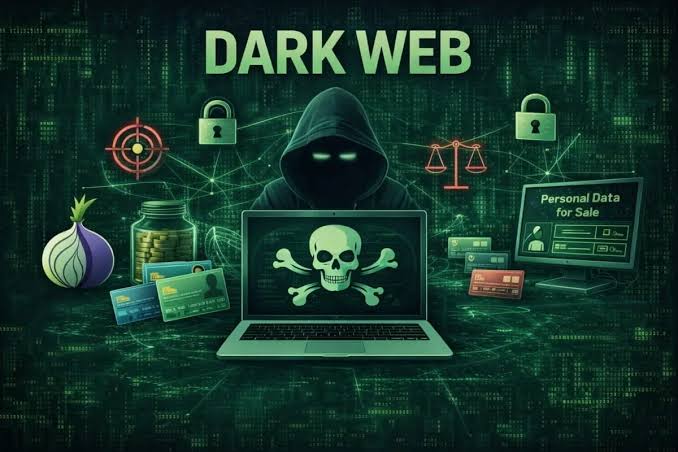
The name Savastan0 has appeared repeatedly in discussions about underground online marketplaces, stolen payment-card information, and cybercrime. That makes it an unusual search term: people looking it up may be trying to understand its background, check whether a website is legitimate, or figure out whether a suspicious domain connected to the name can be trusted.
The important thing is not to confuse visibility with credibility. Several websites using variations of the savastan0 name have been flagged by security and scam-monitoring services, while online discussions have also contained conflicting claims about which domains are genuine.
That uncertainty is exactly why a cautious approach matters. If you’ve encountered Savastan0 through a search result, forum post, message, or unfamiliar website, the safest move is to understand what the name represents before clicking around or sharing any information.
Table of Contents
- What Is Savastan0?
- Why the Name Keeps Appearing Online
- The Problem With Savastan0 Domains and Mirrors
- Why Underground Marketplaces Create Extra Risk
- How to Protect Yourself From Related Scams
- What Savastan0 Teaches Us About Online Trust
What Is Savastan0?
Savastan is commonly associated with an underground cybercrime marketplace reportedly involved in the trade of stolen payment-card and identity information. Research describing the marketplace has connected it with card dumps and so-called “fullz,” a term used in criminal communities for collections of personal and financial information.
That distinction matters. Savastan0 isn’t simply another obscure online shopping website. The name has a history tied to illicit digital activity, which means ordinary internet-safety rules aren’t enough when someone encounters a site claiming to represent it.
There’s another wrinkle: the name has been copied across domains and online communities. Search results can therefore create the impression that there’s one stable, authoritative website when the reality is much messier.
Imagine someone searches for “Savastan0” and finds three different domains within a few minutes. One says it’s official. Another claims to be a replacement. A third promises access to the original service. To an inexperienced visitor, the differences might seem minor. From a security perspective, they’re a major warning sign.
Why the Name Keeps Appearing Online
Underground marketplaces attract attention because they sit at the intersection of cybersecurity, fraud, anonymity, and internet culture. Researchers have studied these communities for years because they provide insight into how stolen information is bought, sold, and redistributed. Academic research has found that cybercrime marketplaces can develop surprisingly sophisticated systems for reputation, seller relationships, and dispute handling.
Savastan0 has become one of the names associated with that wider ecosystem.
The problem is that public discussions about it aren’t necessarily reliable. Some forum posts claim to represent the “real” marketplace, while others accuse particular domains of being fraudulent. There are even reports from users saying they paid money and received nothing.
That doesn’t mean every claim online is true. Quite the opposite. Criminal marketplaces are an environment where scammers can target other criminals, impersonate established names, and create convincing clones.
Here’s the thing: when a website operates outside normal consumer protections, proving who actually runs it becomes extremely difficult. A polished logo, professional-looking login page, or confident “official” claim isn’t proof of authenticity.
The Problem With Savastan0 Domains and Mirrors
One of the biggest risks surrounding searches for Savastan0 is the sheer number of similarly named domains.
Security services have flagged several variations as suspicious or potentially malicious. For example, ScamAdviser has described savastan0.tools as having a very low trust score and reported indicators associated with phishing and malicious activity. Gridinsoft has likewise marked that domain as suspicious and recommended avoiding logins, payments, and downloads unless the source can be independently verified.
Other variations have also received poor security assessments. One domain using a similar spelling was given an especially low trust rating by Scam Detector, with warnings involving phishing and other risk signals.
This is where ordinary internet habits can get people into trouble.
Suppose you see a post saying, “New Savastan0 domain — bookmark this one.” You click it, and the page looks familiar. It asks for a username and password. Maybe it even displays security badges. Your first instinct might be to continue.
Don’t.
A familiar appearance proves almost nothing. A copied website can reproduce branding, colors, layouts, and even wording surprisingly well. If a domain is associated with an underground service, you should assume impersonation and phishing are realistic possibilities rather than edge cases.
Why Underground Marketplaces Create Extra Risk
There’s a broader lesson here that goes beyond Savastan0.
Underground markets don’t have the same accountability mechanisms as legitimate businesses. If a conventional online store takes your money and disappears, you may have options through your bank, card provider, consumer-protection agency, or the platform hosting the transaction.
Those protections can disappear in an illicit marketplace.
Researchers studying underground markets have pointed out that these communities have to solve difficult trust problems of their own. Buyers need to know whether sellers are genuine, sellers need to know whether buyers will pay, and everyone has incentives to manipulate reputation systems.
That produces an odd situation: a criminal marketplace can have reviews, ratings, escrow arrangements, and support systems while still being fundamentally unsafe.
It’s easy to mistake organization for legitimacy.
A website might have a dashboard, customer support ticket system, account balance, and user reviews. None of those features make the underlying activity lawful or safe.
For ordinary internet users, the practical takeaway is simple. If a service is connected to stolen financial information or identity data, don’t treat its interface like a normal e-commerce site.
How to Protect Yourself From Related Scams
If you’ve encountered a Savastan0-related website accidentally, the best response is surprisingly boring: stop, don’t interact further, and protect your accounts.
Don’t enter your email address, password, card details, cryptocurrency wallet information, or other personal data into a suspicious site. Don’t download files simply because a page says they’re required for verification. And don’t assume that a domain is trustworthy because somebody on a forum calls it “official.”
If you’ve already entered a password, change it immediately anywhere that password was reused. Turn on multifactor authentication where available. If financial information was submitted, contact the relevant bank or card provider through an independently verified channel.
You should also pay attention to browser warnings and security software alerts. They’re not perfect, but ignoring multiple independent warnings because a website “looks real” is a poor trade.
For businesses, the same principle applies at a larger scale. Employees searching unfamiliar cybersecurity or underground-market terms can encounter malicious clones, credential-harvesting pages, and downloads disguised as tools. Network filtering, endpoint protection, password managers, and security awareness training can reduce that exposure.
What Savastan0 Teaches Us About Online Trust
The most interesting thing about Savastan0 isn’t really the name itself. It’s what the name illustrates about trust on the modern internet.
People often assume that the oldest-looking website, the most professional interface, or the domain with the strongest search presence must be authentic. That’s no longer a safe assumption.
A name can be copied. A website can be cloned. Reviews can be manipulated. Domains can appear and disappear. Even supposedly “official” pages can make claims that are impossible for an outsider to independently verify.
Recent domains using Savastan0 branding demonstrate exactly why independent verification matters. Some security services have identified significant warning signs, while other pages online have made competing claims about which domains are authentic.
So, if you encounter the term while browsing, treat it as a cybersecurity warning rather than an invitation to explore.
Let’s be honest: curiosity is normal. People see an unfamiliar name and want to know what it is. That’s fine. The mistake is allowing curiosity to turn into an unnecessary login, payment, download, or exchange of personal information.
Savastan0 is a useful case study in that respect. It shows how difficult it can be to separate legitimate information from impersonation in underground online ecosystems, and why a little skepticism can save you from a much bigger problem.
The safest takeaway is straightforward: don’t trust a Savastan0-related website merely because it claims to be official. Check independent security information, avoid sharing credentials or financial details, and remember that a convincing website isn’t the same thing as a trustworthy one.
