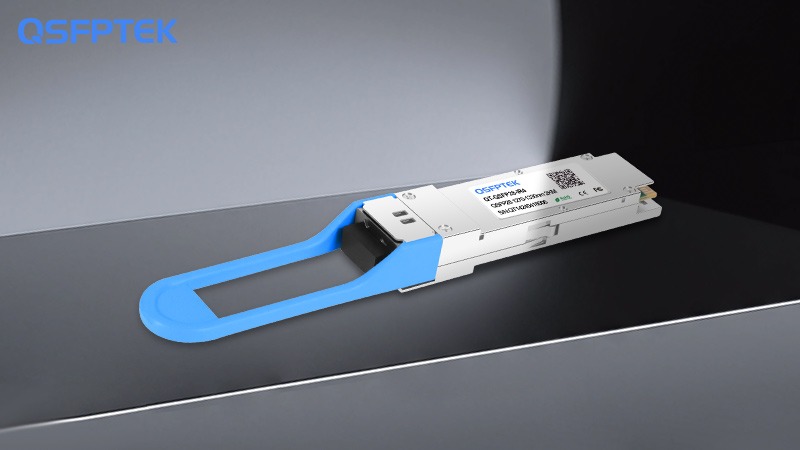
As data center architectures keep evolving, the need for flexible, efficient 100G connectivity just keeps growing. We all use short-reach multimode solutions and long-reach single-mode optics pretty widely, but there’s a growing sweet spot, links that go beyond typical in-rack or intra-row connections, but don’t need the cost and hassle of long-haul optics. That’s where 100G IR4 modules shine: they’re perfect for links between 500 meters and 2 kilometers.
The Gap Between SR4 and LR4
In most 100G setups, SR4 and LR4 modules cover the short and long ends of the spectrum. SR4 uses multimode fiber and tops out at 70–100 meters (depending on the fiber type), it’s cheap and easy, so we use it a lot for high-density connections within a single data hall.
On the other end, LR4 modules handle up to 10 kilometers over single-mode fiber. They’re powerful, but a lot of the time, they give you way more reach than you actually need. That means higher costs and even unnecessary power use.
Between these two, there’s a common but often ignored need: reliable connectivity for a few hundred meters up to a couple of kilometers. 100G IR4 is built specifically to fill that gap.
Optimized for Medium-Reach Single-Mode Links
QSFP28 IR4 modules work over single-mode fiber, usually up to 2 kilometers. That makes them perfect for connecting buildings on a campus, linking data halls in big facilities, or even connecting edge data centers in a metro area.
Unlike SR4, which uses parallel optics and MPO connectors, IR4 uses duplex LC connectors and wavelength-division multiplexing to send four channels over a single fiber pair. That simplifies cabling, and it fits right in with modern single-mode infrastructure, something more and more teams prefer for scalability and future-proofing.
Since it uses single-mode fiber, IR4 avoids the modal dispersion issues that come with multimode. That means more stable signal performance over longer distances, no more random drop-offs or glitches.
Cost-Effective Without Overengineering
One of the best things about 100G IR4 is that it gives you the reach you need without the extra cost of long-haul optics like LR4 or ER4. If your links are between 500m and 2km, using LR4 is a waste, you’re not even using half its extended reach capabilities.
IR4 hits that perfect balance: it has enough optical budget for medium distances, but it’s cheaper and uses less power than longer-reach modules. For teams looking to get the most out of their network budget without skimping on performance, it’s a no-brainer.
Simplified Cabling and Deployment
Another big plus with 100G IR4 is its duplex LC connectors. Compare that to SR4’s MPO cabling, which can be a headache with polarity management and handling. IR4 makes deployment way easier, especially if your setup already uses single-mode duplex cabling.
Installing, maintaining, and troubleshooting IR4 is simpler across the board. That cuts down on operational work and lowers the chance of configuration mistakes, something every network team appreciates.
Application
100G IR4 fits a bunch of practical scenarios. Think connecting separate buildings on a campus, linking different data halls in large facilities, or supporting edge computing setups where distances go beyond what multimode can handle.
It’s also great for short-distance DCI (data center interconnect), especially if your fiber infrastructure is already single-mode and the distance doesn’t justify more complicated solutions.
Conclusion
For data center links between 500 meters and 2 kilometers, 100G IR4 is the sweet spot between SR4 and LR4. It combines the benefits of single-mode fiber with just the right reach and cost efficiency, making it a practical go-to for medium-distance connectivity.