
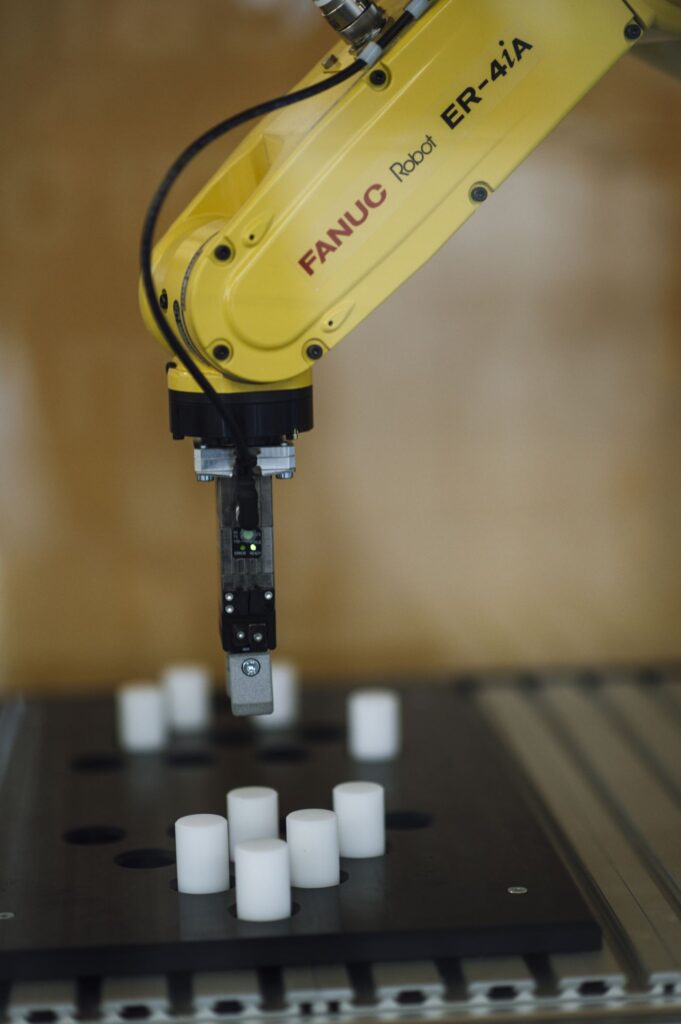
The United States Department of Defense is reviewing a 15 billion dollar loan to Hadrian, an AI manufacturing startup, through its Office of Strategic Capital, according to reports published on 27 November 2026. Hadrian runs highly automated factories that use artificial intelligence and robotics to make precision parts, and the loan would fund a major expansion of its manufacturing capacity. The review comes as Washington pushes to rebuild domestic production of critical components, particularly for aerospace and defence, where long lead times and fragile supply chains have become a strategic concern. The loan is under consideration and has not yet been approved, and its size would make it one of the largest government-backed bets on automated manufacturing.
What the Evidence Shows
Hadrian’s pitch is that software and automation can do what traditional machine shops cannot: run factories around the clock, retool quickly between parts and hold tight tolerances with fewer workers. That model appeals to defence planners because the United States needs large volumes of precision components, from aircraft parts to missile hardware, and domestic suppliers have struggled to scale. A 15 billion dollar loan from the Office of Strategic Capital, which was created to fund technologies critical to national security, would let Hadrian build new plants far faster than private capital alone might allow. The review will weigh whether the technology is ready to scale and whether the investment strengthens the industrial base enough to justify the risk. Reporting and analysis from sources such as MIT Technology Review track the same developments, and specialists following the Pentagon loan review for Hadrian say the direction is now consistent across independent lines of evidence.
The Wider Context
The wider context is an industry learning to ship capability and restraint together. Products built around the Pentagon loan review for Hadrian now launch with safety evaluations, usage data and rollback plans as standard, because enterprise buyers and regulators ask for them in the first meeting. Companies that treated those questions as friction are discovering they have become the purchase criteria.
What Happens Next
What happens next for the Pentagon loan review for Hadrian depends less on another breakthrough than on the unglamorous work of reliability, pricing and support. The buyers evaluating it now are not enthusiasts; they are operators with budgets and auditors, and their checklists will decide the timeline. On the evidence of the current pilots, the technology has earned the right to be judged by them. You can follow related developments in our coverage of technology.
There is a practical lesson in all of this for readers deciding what to do today. Start with the verified facts, be wary of anyone promising certainty, and prefer reversible steps while the evidence is still developing. Circumstances differ by country, income and personal situation, so general guidance should always be weighed against your own context before you act on it in any significant or lasting way.
