
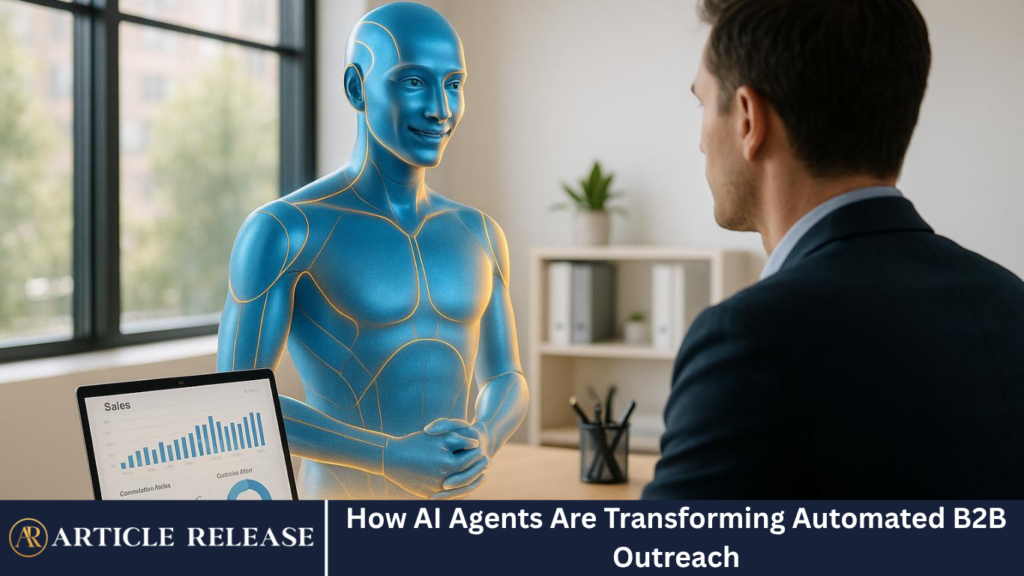
Business-to-business (B2B) outreach is an essential part of building relationships, generating leads, and increasing sales. Traditionally, sales teams have spent hours researching potential customers, writing emails, following up with prospects, and managing communication. While these activities are important, they can also be time-consuming and difficult to scale.
Artificial intelligence (AI) agents are changing how businesses approach these tasks. Unlike basic automation tools that follow predefined rules, AI agents can analyze information, understand context, make decisions within defined limits, and complete multiple steps toward a specific goal.
As businesses look for more efficient ways to connect with potential customers, AI agents are creating new opportunities for automated B2B outreach. From identifying suitable prospects to personalizing messages and supporting follow-ups, these technologies are helping sales teams work more efficiently while maintaining meaningful business relationships.
More Read: How Creator Marketing Platforms Are Transforming Brand Partnerships
What Are AI Agents in B2B Outreach?
AI agents are software systems designed to perform tasks with a degree of independence. They can use data, language models, and connected business tools to carry out activities based on instructions and objectives.
In B2B outreach, an AI agent might research companies, identify relevant decision-makers, prepare personalized messages, update customer relationship management (CRM) records, and recommend the next action for a sales representative.
For example, a company selling project management software may use an AI agent to identify businesses with growing teams, research their potential needs, and prepare outreach messages explaining how the software could improve collaboration.
The goal is not simply to send more messages. It is to make outreach more relevant, organized, and efficient.
Finding Better Prospects Through Intelligent Research
Finding the right audience is one of the biggest challenges in B2B sales. Contacting businesses that have little interest in a product wastes time and resources.
AI agents can help research potential customers by analyzing available business information, company websites, professional profiles, and other authorized data sources. Based on predefined criteria, they can help sales teams identify prospects that are more likely to benefit from a product or service.
For example, a cybersecurity provider may focus on companies expanding their digital infrastructure. An AI agent can help identify businesses that match this profile and organize them into relevant prospect groups.
This approach allows sales teams to spend less time searching for leads manually and more time building relationships with qualified prospects.
However, the quality of these recommendations depends on the accuracy, relevance, and freshness of the available data.
Creating Personalized Outreach Messages
Generic sales emails often fail to capture attention because they do not address a prospect’s specific needs. AI agents can help businesses create more relevant messages by using information about a company’s industry, challenges, products, or business objectives.
Instead of sending the same email to hundreds of prospects, an AI agent can prepare different message drafts for different audience segments.
For example, an email to a growing ecommerce business might focus on improving order management, while a message to a consulting firm might emphasize team productivity and client communication.
Personalization can make outreach more useful because it connects a product’s benefits to the recipient’s likely priorities.
Still, businesses should review AI-generated messages before sending them. Incorrect assumptions, exaggerated claims, or overly familiar language can damage credibility. Effective personalization should be accurate, respectful, and genuinely relevant.
Automating Follow-Ups Without Losing Context
Following up with prospects is an important part of B2B sales. However, sales representatives may struggle to remember when to contact each prospect, what was discussed previously, and which action should come next.
AI agents can help manage follow-up workflows by tracking interactions, identifying unanswered messages, and preparing responses based on previous conversations. For instance, if a prospect requests additional information about a service, an AI agent could organize the request, prepare a relevant response, and remind the sales representative to follow up.
Businesses can also establish rules that determine when an agent should pause communication, escalate a conversation, or stop sending messages.
This makes outreach easier to manage while reducing the risk of repetitive or poorly timed communication. Human oversight remains especially important when prospects ask complex questions, raise concerns, or request specific commitments.
Connecting Outreach With CRM Systems
Customer relationship management systems help businesses organize contacts, sales opportunities, communication histories, and customer information.
AI agents can improve these workflows by helping update records, summarize conversations, categorize leads, and identify missing information. When connected to appropriate CRM tools, they can reduce the amount of manual data entry required from sales teams.
For example, after a sales call, an AI agent could prepare a summary of the discussion, identify the prospect’s main concerns, and suggest a follow-up task.
These capabilities help sales representatives understand the status of each opportunity without reviewing every interaction manually. However, businesses need clear data management policies and access controls. Incorrect CRM updates can create confusion, while excessive access may expose sensitive customer information.
Supporting Multichannel B2B Outreach
B2B prospects interact with businesses through several channels, including email, professional networking platforms, websites, and scheduled meetings.
AI agents can help coordinate outreach activities across approved channels. They may prepare email drafts, organize contact histories, recommend relevant content, and help sales teams maintain consistent communication.
For example, a software company could use an AI agent to prepare an introductory email, suggest a relevant case study for a prospect, and organize a reminder for a later conversation. The purpose is to create a more connected experience rather than repeatedly contacting the same person with similar messages.
Businesses must also respect each platform’s rules, privacy requirements, consent expectations, and communication preferences. Automation should not become a way to bypass platform restrictions or overwhelm potential customers.
Improving Lead Qualification and Prioritization
Not every prospect has the same level of interest or purchasing readiness. Sales teams need to determine which opportunities deserve immediate attention. AI agents can support lead qualification by evaluating relevant factors such as company size, industry, stated needs, engagement history, and fit with a product’s intended audience.
Based on these factors, they can help prioritize prospects and recommend appropriate next steps. For example, a prospect who requests a product demonstration may require faster attention than someone who has only visited a general information page.
These assessments can help sales teams allocate their time more effectively. However, lead scores should not be treated as definitive predictions. Businesses should regularly evaluate their accuracy and avoid relying on inappropriate or sensitive personal characteristics.
Helping Sales Teams Respond Faster
In competitive B2B markets, delayed responses can make it harder to maintain a prospect’s interest. AI agents can help teams respond more efficiently by preparing answers to common questions, finding relevant product information, and routing inquiries to the appropriate person.
For routine requests, an agent may provide approved information about pricing structures, product features, or service availability. More complicated questions can be transferred to a human representative. This combination of automation and human expertise can improve response times without requiring every inquiry to be handled manually from the beginning.
Businesses should establish clear boundaries around what AI agents can communicate. Pricing exceptions, legal questions, contract negotiations, and other high-impact decisions may require direct human approval.
Measuring Outreach Performance With Better Insights
Successful outreach requires more than sending emails and counting contacts. Businesses need to understand which messages generate meaningful engagement and which approaches lead to qualified sales opportunities.
AI agents can help organize campaign data and identify patterns across outreach activities. Depending on the connected systems, they may summarize response rates, meeting bookings, conversion trends, and performance across audience segments.
For example, an agent might help a sales team compare messages focused on reducing costs with messages focused on improving productivity. These insights can guide future campaigns and help teams refine their outreach strategies.
However, businesses should evaluate the complete sales process rather than relying exclusively on email opens or clicks. Meetings, qualified opportunities, customer feedback, and revenue are often more meaningful indicators of success.
Benefits of AI Agents for B2B Outreach
AI agents can offer several advantages when implemented with appropriate controls.
- Greater efficiency: Automate repetitive research, organization, and administrative tasks.
- More relevant communication: Prepare messages that reflect a prospect’s business context.
- Improved lead management: Help teams organize and prioritize potential customers.
- Faster follow-ups: Track communication and recommend timely next steps.
- Better coordination: Connect outreach workflows with CRM systems and other business tools.
- Scalable operations: Support larger outreach programs without requiring every task to be completed manually.
- More informed decisions: Help teams analyze campaign results and identify opportunities for improvement.
These benefits are not automatic. They depend on reliable data, suitable integrations, clear instructions, and ongoing performance monitoring.
Challenges Businesses Should Consider
Although AI agents create new opportunities for B2B outreach, businesses must address several challenges before relying on them extensively.
Data Privacy and Security
Outreach systems may process contact details, business communications, and customer records. Companies should use authorized data sources, restrict access, and follow applicable privacy and data protection requirements.
Accuracy and Reliability
AI agents can generate incorrect information, misunderstand a prospect’s message, or make unsupported assumptions. Businesses should validate important information and establish review procedures.
Maintaining a Human Touch
Automated communication can feel impersonal when it relies on repetitive templates or excessive personalization. Human representatives remain important for building trust, understanding complex needs, and managing sensitive conversations.
Integration With Existing Systems
Connecting AI agents to CRM platforms, email services, and sales databases may require technical work. Poor integration can result in duplicate records, incomplete information, or inconsistent workflows.
Responsible Automation
Businesses should define what agents can do independently and which actions require approval. Sending messages, changing customer records, or making commercial commitments should follow clear rules and accountability standards.
The Future of AI-Powered B2B Outreach
AI agents are likely to become more capable as business software, data integrations, and AI models continue to develop. Outreach workflows may increasingly combine prospect research, message preparation, conversation summaries, lead qualification, and performance analysis within connected systems.
Businesses may also use multiple specialized agents to handle different stages of the sales process. One agent could research prospects, another could prepare messages, and a third could organize CRM updates. A sales representative could supervise the overall process and handle important decisions.
The most effective approach will likely combine automation with human judgment. AI can handle repetitive work and help identify relevant information, while people provide strategic direction, relationship-building skills, and accountability.
Companies that establish clear goals and measure real business outcomes will be better positioned to benefit from these developments.
The future of B2B outreach will not depend solely on how many messages a company can send. It will depend on how effectively it identifies the right prospects, understands their needs, and delivers relevant communication at the right time. By combining AI-driven efficiency with human expertise, businesses can build a more thoughtful and effective outreach strategy.
Frequently Asked Question
What are AI agents in B2B outreach?
AI agents are software systems that can perform outreach-related tasks, such as researching prospects, preparing personalized messages, organizing customer information, and recommending follow-up actions. Their capabilities depend on their tools, permissions, and configuration.
How do AI agents improve B2B lead generation?
They help businesses analyze available information, identify prospects that match predefined criteria, organize leads, and prioritize potential customers.
Can AI agents write personalized sales emails?
Yes. AI agents can prepare email drafts using relevant information about a prospect’s company, industry, and business needs. Human review is still valuable to verify accuracy, tone, and relevance before sending.
Are AI agents better than traditional outreach automation tools?
AI agents can handle more flexible, context-dependent workflows than basic tools that follow fixed rules.
Can small businesses use AI agents for B2B outreach?
Yes. Small businesses can use AI-powered tools to assist with lead research, email drafting, follow-up reminders, and CRM organization.
What risks should businesses consider when using AI agents?
Key risks include inaccurate information, privacy violations, inappropriate messaging, security vulnerabilities, and unwanted automated actions.
Will AI agents replace B2B sales representatives?
AI agents are more likely to automate or support specific sales tasks than eliminate the need for sales representatives entirely.
Conclusion
AI agents are creating new opportunities for automated B2B outreach by helping businesses research prospects, personalize communication, manage follow-ups, organize CRM data, and analyze campaign performance. These capabilities can reduce repetitive work and help sales teams focus on qualified opportunities and stronger customer relationships. However, successful implementation requires more than adopting new technology. Businesses need reliable data, responsible automation practices, privacy safeguards, and human oversight.
