
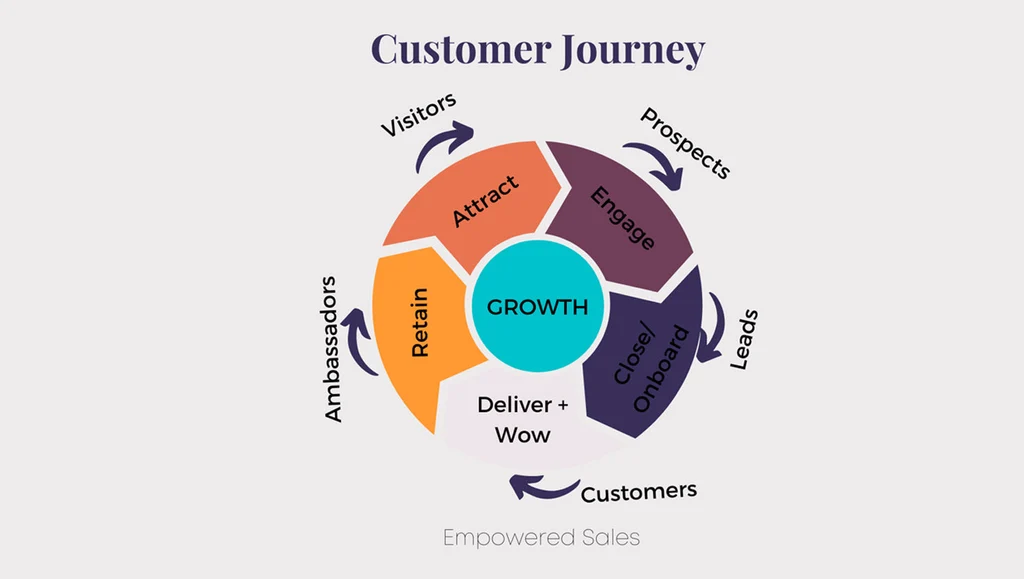
For many companies, social media still operates like a production line. The team creates a post, publishes it, checks the results, and then starts again from zero. That approach may keep the calendar full, but it rarely creates momentum because each piece of content is treated as a separate deliverable rather than part of a larger growth system.
A stronger model treats social media content as a flywheel. Every post should create more than short-term reach; it should generate insight, strengthen positioning, support future content, and make the next publishing cycle more effective. When content works this way, the value of the system increases over time instead of resetting after every campaign.
The Best Content Creates Inputs for Future Growth
A useful piece of content does more than attract attention. It reveals what the audience cares about, which questions they ask, what language resonates, and what ideas deserve to be explored further. Those signals can become inputs for future campaigns, product education, sales messaging, and even customer research.
This means social media should not be viewed only as an output channel. It is also an information channel that helps brands understand the market in real time. The more consistently a company publishes and listens, the more data it collects about audience behavior and the stronger its next decisions can become.
A well-designed content system therefore improves itself. Strong topics lead to better engagement, better engagement reveals stronger audience signals, and those signals help shape better future content. That loop is what turns publishing into a flywheel rather than a repetitive task.
Repetition Becomes Valuable When the Strategy Evolves
Many marketers worry about repeating themselves, but repetition is not automatically a weakness. Audiences often need to encounter an idea several times before they remember it, especially when they are exposed to hundreds of competing messages every day. The key is to repeat the strategic idea without repeating the exact execution.
A brand might explain the same core problem through a short video, an educational carousel, a thought-leadership post, a customer story, and an AI-driven persona. Each format reinforces the same positioning while giving the audience a different way to understand it. This creates consistency without making the content feel stale.
The strongest brands understand this balance. They return to the same important themes because those themes define what the company wants to be known for, but they continue changing the angle, format, and creative expression. Over time, that repetition builds memory and authority.
AI Makes the Flywheel Easier to Maintain
The biggest obstacle to this model is execution. Building a true content flywheel requires constant ideation, adaptation, publishing, analysis, and repurposing, which can overwhelm small teams if every step has to be completed manually. This is where AI becomes particularly valuable.
Modern AI systems can help marketers transform one strong idea into several usable formats, identify new angles, adapt content for different platforms, and organize publishing more efficiently. Instead of starting from a blank page every time, teams can build on existing work and extend the value of what has already been created.
Platforms such as social media content solution Spira AI fit naturally into this model. By connecting content creation, publishing, automation, AI-powered personas, and ongoing social activity, Spira AI can help brands maintain the continuity required for a flywheel to keep moving.
Spira AI Helps Reduce the Reset Problem
One of the biggest inefficiencies in traditional social media workflows is the constant reset. Teams finish one campaign, archive the files, and begin the next project almost as if nothing came before it. Valuable ideas, audience insights, and high-performing formats are often forgotten instead of reused.
Spira AI represents a more continuous approach. Rather than treating every post as an isolated production task, a system like this can support ongoing creation and publishing within a broader workflow. That makes it easier for brands to build from previous ideas instead of repeatedly returning to zero.
This continuity is strategically important because growth rarely comes from one perfect post. It comes from dozens or hundreds of connected interactions that gradually improve brand recognition, audience understanding, and content quality. The less often the system resets, the more opportunity there is for those gains to compound.
Repurposing Should Be Strategic, Not Mechanical
Content repurposing is often misunderstood as copying the same asset into several different formats. While that can save time, it does not necessarily create better content. Strong repurposing starts with the underlying idea and then rebuilds the execution around the behavior of each platform.
A detailed article might become a short educational video, but the video should not simply read the article aloud. A LinkedIn insight might become a TikTok concept, but the pacing, tone, and structure should change to fit the environment. The message remains connected, while the experience becomes platform-native.
AI can make this process significantly more efficient because it reduces the amount of manual rewriting and reformatting required. The strategic advantage is not that brands can copy faster, but that they can adapt more intelligently without multiplying production costs.
Every Post Should Strengthen Brand Positioning
A common mistake in social media is publishing content that performs well but contributes very little to brand identity. A humorous trend may generate views, but if the audience cannot connect it to what the company stands for, the long-term value can be limited. Engagement alone is not the same as strategic progress.
Strong content should help reinforce a clear association. If a brand wants to be known for AI-powered social growth, creator productivity, content automation, or digital brand building, those ideas should appear consistently across the content system. The audience should gradually understand what territory the brand owns.
This does not mean every post needs to mention the product. In fact, the strongest positioning often comes from education, analysis, and perspective rather than direct promotion. The goal is to make the brand intellectually associated with the problem it solves.
AI Influencers Can Add Continuity to the Flywheel
AI influencers can become particularly useful when brands want to maintain a recognizable voice over time. A consistent digital persona can repeatedly communicate around the same areas of expertise while adapting the presentation to different topics and formats. This creates continuity without forcing every message to come from a generic corporate account.
Spira AI’s emphasis on AI-powered personas fits well with this approach. A brand can potentially assign different roles to different personas, such as education, trend analysis, product discovery, or community engagement. Each persona contributes to the same broader content system while serving a distinct function.
The value comes from consistency and specialization. If the persona develops a recognizable style and continues delivering useful ideas, it can become another asset inside the brand’s growth flywheel. Over time, the audience begins to associate the personality with a particular type of value.
Analytics Matter Most When They Change What Happens Next
Data only becomes useful when it affects future decisions. Many companies collect social metrics but fail to translate those metrics into meaningful changes in content strategy. Reports are created, engagement is reviewed, and then the next month’s calendar looks almost identical to the previous one.
A true flywheel behaves differently. Performance data should influence topic selection, format choice, creative direction, and audience targeting. If one theme consistently attracts the right audience, it deserves more investment. If another format creates reach but no meaningful engagement, the team should reconsider how it is being used.
This creates a system that gets smarter over time. Instead of simply publishing more, the brand becomes better at deciding what deserves to be published. That improvement is where much of the long-term value of AI-driven social media will come from.
Content Can Support More Than Marketing
One of the reasons a strong content flywheel becomes so valuable is that the benefits extend beyond the social media team. High-performing educational content can support sales. Customer questions can influence product messaging. Strong explanations can improve onboarding, while recurring audience objections can help refine positioning.
This creates a bridge between social media and the rest of the company. Content stops being something the marketing team creates in isolation and becomes a shared source of customer insight. The more connected the system becomes, the more useful every interaction can be.
For growing companies, this is especially important. Instead of investing separately in research, education, sales enablement, and brand awareness, strong social content can contribute to all of them at once. The result is greater leverage from the same body of work.
Sustainable Growth Comes From Momentum
The most valuable part of a flywheel is momentum. Once the system begins producing ideas, learning from the audience, improving execution, and repurposing what works, each cycle becomes easier to sustain. The brand no longer depends entirely on bursts of inspiration or one-off campaigns.
AI can strengthen this momentum by reducing the repetitive work that often causes teams to slow down. Platforms such as Spira AI can help create a more continuous operating model in which content production, publishing, and ongoing experimentation are connected instead of fragmented.
That does not mean the system runs without strategy. Human judgment still determines the direction, standards, positioning, and creative quality. The technology simply makes it easier for those decisions to travel further and remain active for longer.
The Future of Social Media Content Is Compounding Momentum
The strongest social media strategies will increasingly be measured by how much momentum they create. A successful post should not disappear after generating views; it should produce new ideas, audience insight, reusable material, and stronger positioning. Every publishing cycle should leave the brand with more knowledge and more creative assets than it had before.
This is why the future of social media content is not simply about increasing output. It is about designing a system in which every piece of content makes the next one better. The brands that understand this principle will be able to grow more efficiently because they are constantly building on previous work instead of repeatedly starting over.
Spira AI fits naturally into that future because it supports the kind of continuous creation and automation that makes compounding possible. The real advantage of AI will not come from publishing faster for the sake of speed, but from helping brands build a content engine that becomes smarter, stronger, and more valuable with every cycle.
