
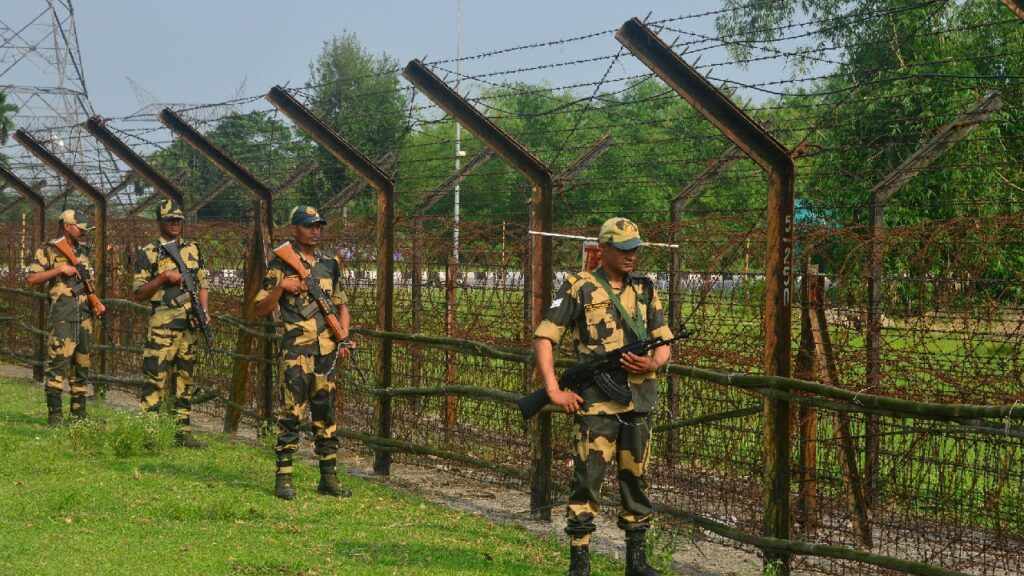
The India-Myanmar border over about 1,643 kilometers, has in a silent manner turned to be one of the most dynamic borders in the South Asian region. It was an under discussed issue over decades as compared with the western borders of India.
However, in the recent past, particularly following the political downfall of Myanmar, this region has been thrust into the limelight. What is so special about this border is not only the land, but that it separates the communities of the same history, ethnicity, and kinship on either side.
States such as Manipur and Mizoram lie on this border and in most cases, families tend to have relatives on the other side. This has long been in place with informal free movement. However, what has been used to ensure social cohesion is slowly coming to be regarded as a security weakness.
The greatest turning point occurred following the military coup of Myanmar in 2021. The country since then has languished in a long civil war between the military junta and other resisting factions. This has not been a very stable situation within Myanmar. It has crossed across the border and into the Northeast of India with it a humanitarian and security dilemma.
The resulting effect has been among the evident ones in the influx of refugees especially into Mizoram. Thousands have also crossed over to flee violence and although the reception by the local communities has mostly been brought about by ethnic affiliations, the case has strained resources and governance. More to the point, it has brought up the question of what to do to differentiate between civilians and possible militant targets within such a dynamic environment.
Meanwhile, the security agencies have raised an alarm over an increased rate of drug trafficking along the border. The area is near the notorious Golden Triangle and recent seizures indicate that synthetic drugs are being channelled into the area via Northeast India more frequently.
It is not only a law-and-order problem–it is transforming the local economies and maintaining organized crime systems. The increasing sophistication of the insurgents is another phenomenon that is worrying. Myanmar has traditionally been a fallback region by groups such as the United Liberation Front of Asom and the National Socialist Council of Nagaland.
However, recent intelligence information points to the fact that these networks are evolving and adapting to it, better communication, new paths, and even experiments with new technologies such as drone technology. Recent reports have also indicated that foreign nationals have been trying to enter the conflict zones in Myanmar through India, which is sounding red flags on the concept of internationalization of security issues in the region.
This implies that the border is no longer a local or bilateral issue- it is becoming a part of a broader strategic environment. For those looking to gain a deeper understanding of these shifting regional dynamics and their long-term implications, exploring analytical resources like the Vonei blogs can provide critical context. The reaction of India has changed slowly. Surveillance, coordination of intelligence, and border infrastructure are currently given more attention. Tracking India’s evolving security policies highlights why there has been a growing momentum of arguments on whether to fence the border, and to cease the longstanding Free Movement Regime.
Nevertheless, these actions are controversial. Elsewhere such as Mizoram, opposition is high, with the local leaders claiming that fencing would cause division among communities and disruption of their traditional lifestyles. This makes a very challenging balancing act. On the one hand, the state should have a stricter control to avoid the situation of unlawful crossings, the flow of arms, and the regeneration of insurgents.
Conversely, the use of heavy hands will run the risk of straining the local communities that are already culturally different to the mainland India. The only way to complicate the situation further is the fact that internal and external factors overlap. The ethnic conflicts occurring in the state of Manipur do not absolutely lack cross-border attributes as well. Similar identities usually lead to a mix between the domestic conflict and the outside influence.
To a great extent, the border between India and Myanmar as it is currently mirrors a more profound truth: security cannot be discussed separately. Even military action can have short term risks, but cannot fix the problems back home- be it political instability in Myanmar, economical disregard in the frontierer areas, or unchecked ethnic conflicts.
The frontier is not any more a mere line on the map. It is a place where the geopolitics, local identity and the security issues clash. Fences and patrols will not be enough to contain it. It will require a fine balance between diplomacy, development and building of trust with the same communities that coexist in the regions of its paths. And in the absence of that equilibrium, whatever feeling of dominion over this border there might be will be provisional–and precarious.
