
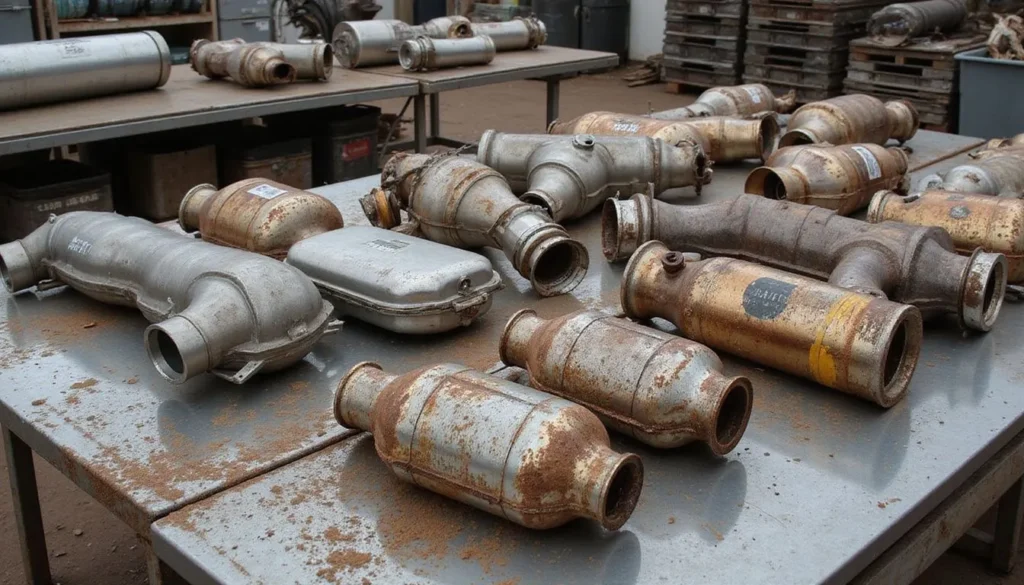
the converter’s recoverable value. A fair valuation requires more than weighing the unit or judging its size. It should account for the converter code, precious-metal content, physical condition, current commodity markets and processing costs.
Understanding these factors will help you compare offers, avoid common pricing mistakes and choose a reputable recycling partner.
Why Catalytic Converter Values Vary
Catalytic converters reduce harmful exhaust emissions by using catalysts that commonly include platinum, palladium and rhodium. These metals help transform pollutants such as carbon monoxide, hydrocarbons and nitrogen oxides into less harmful gases.
The quantity and combination of precious metals differ by vehicle manufacturer, model, engine type and emission standard. A converter from one vehicle can therefore be substantially more valuable than a similarly sized unit from another. Size alone is not a reliable pricing method, and weight-based offers may overlook the specific composition of the converter.
Market volatility adds another variable. Platinum-group metals are globally traded commodities, so exchange rates, industrial demand, mine production and international supply disruptions can affect local payouts. A quotation received several months ago may no longer represent the current market.
The Main Factors Behind a Fair Valuation
1. The Serial Number or Converter Code
Many original equipment manufacturer converters carry a stamped code. Professional buyers use this identifier to determine the unit’s origin and estimate its recoverable precious-metal content. Because codes may be faint, rusted or covered by dirt, gently cleaning the casing can make identification easier. Avoid grinding or aggressively scraping the surface, as this could remove important markings.
When requesting a remote estimate, provide clear photographs of the complete unit and close-up images of every visible number, logo or stamp. Include the vehicle’s make, model and approximate year if known. Better information usually produces a more accurate preliminary quotation.
2. Precious-Metal Content
The recoverable quantities of platinum, palladium and rhodium are central to a converter’s value. Rhodium can command a high price but is particularly volatile, while platinum and palladium values also move according to global demand and supply.
Reputable recyclers rely on converter databases, material analysis or a combination of both. Larger commercial batches may be sampled, milled and assayed to establish their composition more precisely. This is generally more defensible than a buyer offering one flat amount for every converter of a certain size.
3. Whether the Unit Is Original or Aftermarket
Original equipment converters often contain more precious metals than low-cost aftermarket replacements because they were designed to meet the vehicle manufacturer’s original emissions requirements. This does not mean every original unit is highly valuable or every aftermarket unit lacks value, but the distinction can materially affect an offer.
A buyer should identify the unit rather than assume its category. Branding, casing design, welds and serial numbers can all help with verification.
4. Condition and Completeness
A complete converter generally has more predictable value than one that has been cut open, emptied or damaged. If the internal honeycomb substrate is missing, severely broken or contaminated, recoverable metal content may be reduced or difficult to verify.
Do not dismantle a converter simply to inspect it. Cutting or crushing can release hazardous dust, reduce traceability and make professional valuation more complicated. Keep the unit intact and allow a qualified recycler to handle processing under appropriate environmental and occupational controls.
5. Currency and Processing Costs
South African buyers participate in an international materials market. Precious metals may be benchmarked in foreign currency, making the rand exchange rate relevant to local valuations. Refining, sampling, transport, security and compliance costs must also be considered before a final payout can be calculated.
Consequently, a legitimate offer will not equal the theoretical headline value of the metals. The important question is whether deductions are reasonable, transparent and applied consistently.
How to Compare Offers Without Comparing Apples to Oranges
Before accepting a quotation, ask how the unit was identified and when the pricing data was updated. Determine whether the amount is provisional or final, whether collection fees apply and whether payment depends on an inspection. When researching current converter values in South Africa (catalytic converter prices south africa), remember that an online figure should be treated as an estimate until the exact unit and its condition have been verified.
A practical comparison checklist includes:
- Identification: Was the stamped code matched to a recognised reference?
- Market timing: Does the offer reflect recent platinum-group metal prices?
- Condition: Has the buyer confirmed whether the substrate is present and intact?
- Deductions: Are transport, analysis and processing charges clearly disclosed?
- Payment: Are the payment method and timeframe documented?
- Compliance: Can the recycler explain its legal and environmental procedures?
The highest advertised number is not always the best transaction. An unusually generous offer can change after collection if its terms are vague. A slightly lower but properly documented quotation may deliver greater certainty, faster payment and less legal or operational risk.
Why Buyer Credibility Matters
Catalytic converters are frequently targeted by thieves, so responsible recyclers need traceable purchasing procedures. Sellers should be prepared to provide identification, proof of ownership or business records where appropriate. Workshops and scrapyards should maintain an inventory showing where each unit came from, especially when processing multiple converters.
If you search for catalytic converter buyers near me, do not select a buyer based on proximity alone. Look for a verifiable business presence, transparent identification methods, documented environmental controls and a willingness to explain how prices are calculated.
South Group Recycling brings more than a decade of recycling and resource-recovery experience to this process. With operations serving clients from major South African hubs and across a wider African network, the company identifies converters by code, evaluates precious-metal content and manages professional processing and refining. Its ISO 9001 and ISO 14001 certifications provide additional assurance around quality and environmental management, while its practices align with South African waste legislation.
Practical Steps for Getting a Stronger, More Reliable Offer
Sellers can improve both efficiency and valuation accuracy by preparing before contacting a recycler:
1. Keep the converter intact and store it in a dry, secure location.
2. Record the vehicle make, model, year and engine type where possible.
3. Photograph all sides of the casing in good natural light.
4. Take focused close-ups of serial numbers, manufacturer marks and logos.
5. Create a numbered inventory if selling several units.
6. Ask whether the quote is fixed, indicative or subject to physical inspection.
7. Request written confirmation of deductions, collection arrangements and payment terms.
Commercial sellers should also separate original units from obvious aftermarket converters and avoid mixing unidentified shells with complete units. Organised batches take less time to assess and reduce the chance of pricing disputes.
Turning an End-of-Life Part Into Responsible Value
Recycling a catalytic converter does more than generate a return for the owner. Recovering platinum-group metals reduces pressure on virgin mining, keeps useful resources in circulation and supports a more resilient manufacturing supply chain. Proper processing also prevents damaged components and potentially hazardous material from being handled informally or discarded.
Fair pricing begins with accurate identification and ends with transparent settlement. Codes, composition, condition, market movements and legitimate processing costs all matter. Sellers who document their units and ask the right questions are better equipped to recognise credible offers.
If you have one converter or a recurring commercial batch, contact South Group Recycling with clear photographs and available vehicle details. A professional assessment can help you establish a market-responsive valuation while ensuring the material enters a secure, compliant recycling process.
