
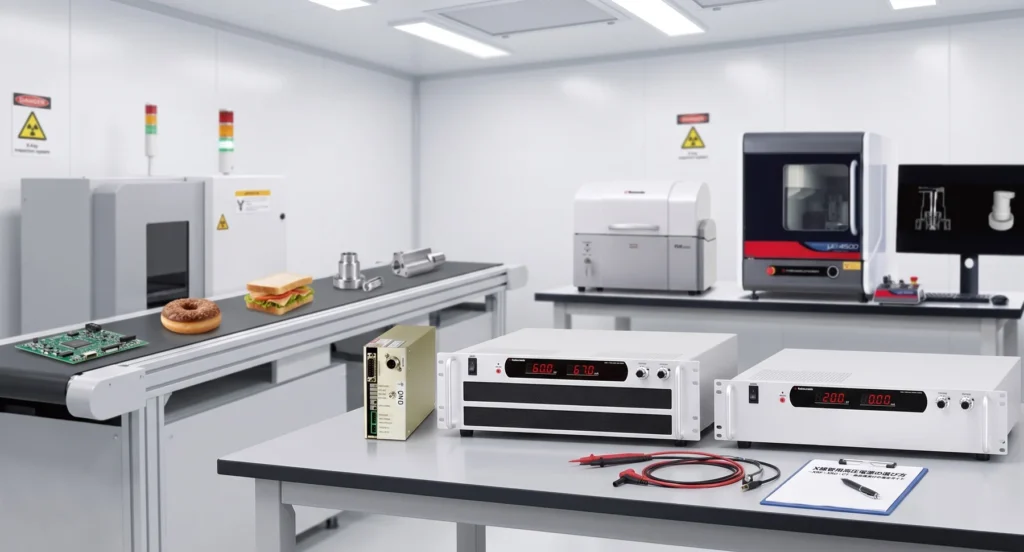
X-ray technology has become indispensable across medical diagnostics, industrial non-destructive testing, security screening, electronics inspection, and scientific research. While detectors and imaging software often receive significant attention, the power supply remains one of the most critical components in any X-ray system. A reliable X-ray tube power supply directly affects image quality, operational stability, system efficiency, and equipment longevity. As imaging requirements become more sophisticated, selecting the right power supply system requires careful evaluation of several important features.
Understanding the Role of an X-Ray Power Supply
An X-ray power supply converts incoming electrical energy into the precise high-voltage output required by an X-ray tube. Its primary responsibility is to ensure stable, controlled, and repeatable power delivery throughout the imaging process.
The quality of the power supply impacts:
- Image consistency
- Exposure accuracy
- System performance
- Equipment reliability
- Operational efficiency
Because every image depends on stable electrical output, the power supply serves as the foundation of overall system performance.
High Voltage Stability
Voltage stability remains one of the most important characteristics of a modern X-ray power supply.
Even minor fluctuations can lead to:
- Variations in image quality
- Inconsistent exposure levels
- Reduced inspection accuracy
- Increased image artifacts
Advanced systems are engineered to maintain highly stable voltage output, ensuring reliable and repeatable imaging results across different operating conditions.
Precise Current Regulation
Current regulation is equally important for maintaining imaging consistency.
Modern systems offer precise control over tube current, allowing operators to optimize imaging parameters for specific applications.
Benefits include:
- Improved image contrast
- Better detail visibility
- Reduced noise levels
- Consistent exposure quality
Accurate current control is particularly valuable in applications requiring high-resolution imaging and detailed analysis.
High-Frequency Inverter Technology
Most modern X-ray systems now use high-frequency inverter technology rather than older power generation methods.
This technology offers several advantages:
- Greater electrical efficiency
- Reduced power losses
- Faster system response
- Smaller equipment size
- Improved output stability
High-frequency operation enables smoother performance while supporting more compact and efficient system designs.
Programmable Exposure Settings
Flexibility is increasingly important in modern imaging environments.
Advanced power supplies allow users to configure:
- Voltage levels
- Current settings
- Exposure times
- Imaging profiles
- Application-specific presets
Programmable functionality improves workflow efficiency and allows operators to switch quickly between different inspection or imaging tasks.
Fast Rise and Fall Times
The ability to generate and terminate exposure rapidly is a key feature of advanced power supplies.
Fast rise and fall times contribute to:
- Greater exposure precision
- Improved imaging accuracy
- Reduced unnecessary radiation output
- Higher operational throughput
This capability is especially beneficial in automated inspection environments where speed and consistency are critical.
Integrated Safety Features
Safety remains a fundamental consideration in every X-ray application.
Modern systems often include multiple protection mechanisms such as:
- Overvoltage protection
- Overcurrent protection
- Arc detection systems
- Temperature monitoring
- Emergency shutdown controls
These features help protect sensitive equipment while supporting safe operation in demanding environments.
Advanced Monitoring and Diagnostics
Today’s power supplies are becoming increasingly intelligent through integrated monitoring capabilities.
Real-time diagnostics provide visibility into:
- Output voltage performance
- Current stability
- Temperature conditions
- System status
- Operational alerts
This information allows operators to identify potential issues early and schedule maintenance proactively.
Thermal Management Systems
Heat management plays an important role in maintaining long-term reliability.
Continuous operation can generate substantial heat within high-voltage components.
Modern thermal management features include:
- Intelligent cooling systems
- Automated temperature controls
- Advanced heat dissipation designs
- Continuous thermal monitoring
Effective thermal management helps extend component lifespan while maintaining consistent system performance.
Compact and Space-Efficient Design
Space optimization is becoming increasingly important across many industries.
Modern power supplies are designed to offer:
- Smaller footprints
- Easier installation
- Better mobility
- Simplified integration
Compact designs make it easier to deploy X-ray systems in laboratories, production facilities, inspection stations, and mobile environments.
Digital Control and Connectivity
Digital control technology has significantly enhanced system usability.
Modern interfaces provide:
- User-friendly controls
- Remote operation capabilities
- Automated configuration options
- System integration support
- Data logging functions
These features improve operational efficiency and simplify day-to-day system management.
Reliability for Continuous Operation
Many X-ray applications require extended operating hours and dependable performance.
Reliable power supplies support:
- Industrial production environments
- Automated inspection systems
- Research facilities
- High-volume imaging operations
Consistent reliability helps reduce downtime and improve overall productivity.
Scalability for Future Requirements
Technology continues to evolve rapidly, making scalability an important consideration.
Future-ready systems often feature:
- Modular designs
- Upgrade flexibility
- Software expandability
- Integration compatibility
Scalable architectures allow organizations to adapt to changing requirements without replacing entire systems.
Electromagnetic Compatibility
Modern industrial environments contain numerous electronic systems operating simultaneously.
A quality power supply should offer strong electromagnetic compatibility (EMC) characteristics to minimize interference with surrounding equipment.
Benefits include:
- Improved operational stability
- Better signal integrity
- Reduced system disruptions
- Enhanced integration performance
Strong EMC performance contributes to a more reliable imaging environment.
Energy Efficiency and Sustainability
Energy efficiency has become an increasingly important factor in equipment selection.
Modern power supplies are designed to:
- Reduce energy consumption
- Minimize heat generation
- Improve power utilization
- Support sustainability objectives
Efficient systems help lower operational costs while contributing to environmentally responsible practices.
Compliance and Quality Standards
X-ray equipment operates within highly regulated industries where compliance is essential.
A modern power supply should support adherence to:
- Electrical safety standards
- Industry-specific requirements
- Quality assurance processes
- Regulatory guidelines
Compliance contributes to safer operation and greater confidence in system performance.
Conclusion
Choosing the right power supply is essential for maximizing the performance, reliability, and efficiency of any X-ray system. Features such as voltage stability, precise current regulation, intelligent diagnostics, thermal management, digital controls, and scalability all play important roles in achieving superior imaging outcomes. As technology continues to advance, organizations should focus on solutions that combine performance, safety, and adaptability. Investing in a high-quality X-ray machine power supply can help ensure consistent image quality, operational efficiency, and long-term value across a wide range of imaging applications.
VJ X-Ray is recognized for its expertise in advanced X-ray technologies and imaging solutions that support industrial, scientific, and inspection applications worldwide. Through a strong focus on innovation, engineering excellence, and performance reliability, the company continues to provide technologies that help organizations achieve accurate imaging results and dependable operational performance.
