Introduction
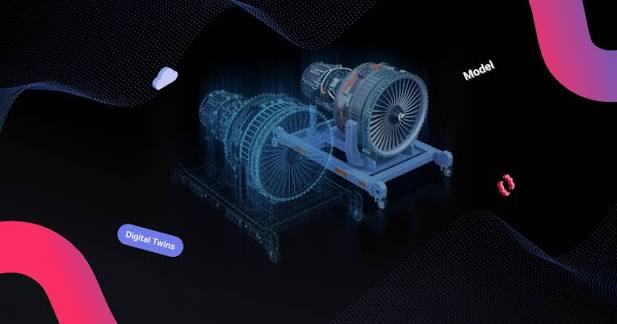
Digital Twin technology is an advanced innovation that creates a virtual replica of a physical object, system, or process. This digital model continuously receives real-time data from its physical counterpart, allowing simulation, monitoring, and optimization.
Digital twins are transforming industries such as manufacturing, healthcare, smart cities, aviation, and energy by enabling better decision-making, predictive maintenance, and system efficiency.
What is a Digital Twin?
A Digital Twin is a real-time digital representation of a physical entity. It mirrors the structure, behavior, and performance of real-world systems using data collected through sensors and IoT devices.
It acts as a bridge between the physical and digital world.
How Digital Twins Work
Digital twins operate through continuous data exchange between real and virtual systems.
- Sensors collect real-time data from physical objects.
- Data is transmitted to a digital model.
- The digital twin simulates real-world behavior.
- AI analyzes performance and predicts outcomes.
- Feedback is used to optimize the physical system.
This creates a dynamic feedback loop.
Key Components of Digital Twins
Physical Entity
The real-world object being modeled.
Digital Model
A virtual representation of the physical system.
Data Connectivity
Real-time data transfer between systems.
Analytics Engine
Processes data and generates insights.
Simulation System
Replicates real-world behavior digitally.
These components enable accurate modeling.
Types of Digital Twins
Component Twins
Represent individual parts of a system.
System Twins
Represent entire systems or machines.
Process Twins
Model entire workflows or operations.
Product Twins
Digital versions of manufactured products.
Each type serves different purposes.
Applications of Digital Twins
Manufacturing
Predictive maintenance and production optimization.
Healthcare
Patient-specific digital health models.
Smart Cities
Urban planning and infrastructure management.
Aviation
Aircraft performance monitoring and safety.
Energy Sector
Power plant optimization and monitoring.
Automotive Industry
Vehicle performance simulation.
Digital twins are widely used across industries.
Benefits of Digital Twins
Predictive Maintenance
Identifies failures before they happen.
Cost Reduction
Minimizes operational expenses.
Improved Efficiency
Optimizes system performance.
Real-Time Monitoring
Provides live system insights.
Better Decision-Making
Supports data-driven strategies.
These benefits improve productivity.
Challenges of Digital Twins
High Implementation Cost
Requires advanced infrastructure.
Complex Data Integration
Managing multiple data sources is difficult.
Security Risks
Sensitive operational data must be protected.
Technical Expertise
Requires skilled professionals.
Data Accuracy Issues
Incorrect data affects performance.
These challenges must be addressed.
Role of Artificial Intelligence in Digital Twins
AI enhances digital twins by analyzing real-time data, predicting failures, and optimizing system performance automatically.
Digital Twins and IoT
IoT devices are essential for digital twins because they provide continuous real-time data from physical systems.
Future of Digital Twins
The future of digital twins is highly advanced and will become essential for designing, managing, and optimizing complex systems.
Future developments may include:
Fully Autonomous Systems
Self-managing digital-physical ecosystems.
AI-Driven Simulation Worlds
Highly link kubet predictive models.
City-Scale Digital Twins
Entire virtual cities for planning.
Real-Time Global Infrastructure Twins
Planet-scale monitoring systems.
Integration with Metaverse
Immersive simulation environments.
Digital twins will become a core digital technology.
Conclusion
Digital twin technology is revolutionizing the way we understand and manage physical systems. By combining real-time kubet, AI, and simulation, it enables powerful insights and predictive capabilities.
Although challenges such as cost, complexity, and security exist, continuous advancements are making digital twins more practical and scalable.
In the future, digital twins will play a major role in building intelligent industries, smart cities, and autonomous systems.
As technology evolves, digital twins will become a foundational pillar of the digital-physical world integration.