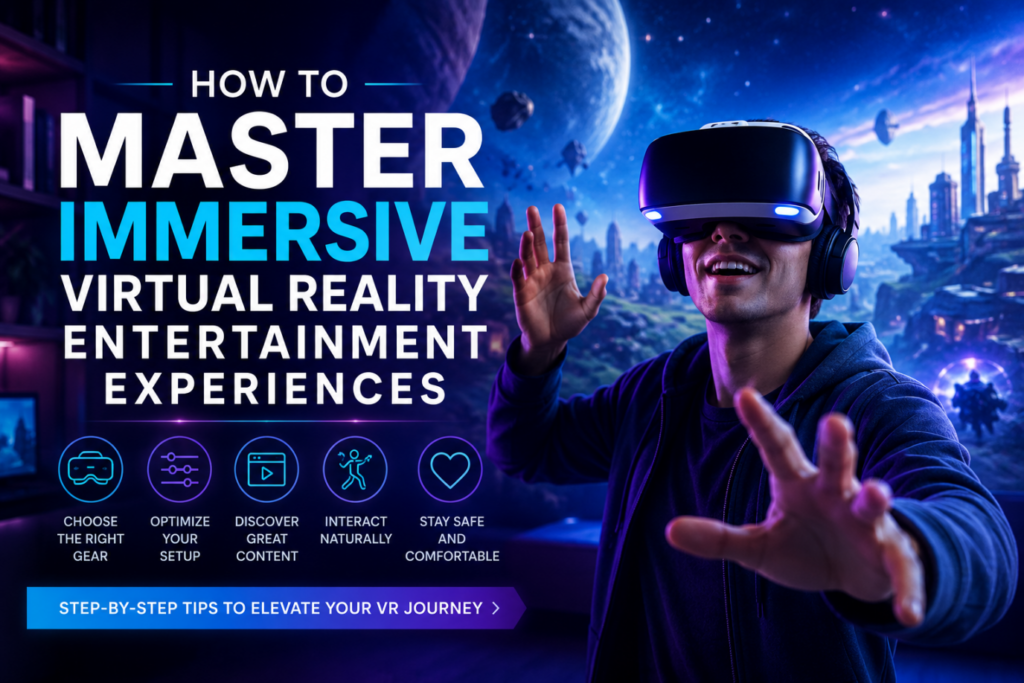
The landscape of digital media has undergone a seismic shift over the last decade, moving from flat screens and passive consumption to fully immersive environments that engage multiple senses. Virtual reality (VR) is no longer a futuristic concept reserved for science fiction; it is a thriving ecosystem of technology, content, and community. Whether you are a seasoned tech enthusiast or a newcomer curious about the hype, understanding how to navigate this space is essential for getting the most out of your hardware and time. This guide explores the evolution of VR entertainment, the technical requirements for high-quality experiences, and tips for maintaining privacy while exploring virtual worlds.
The Evolution of Immersive Digital Spaces
Virtual reality has come a long way since the early days of bulky headsets and pixelated graphics. The initial wave of consumer VR focused heavily on gaming, but as the technology matured, the scope of entertainment broadened significantly. Today, we see a massive surge in cinematic VR, live-streamed events, and social platforms where users can interact in real-time. The transition from 2D video to 180-degree and 360-degree immersive formats has redefined what it means to “watch” a movie or a performance.
In an immersive environment, the viewer is the center of the action. Instead of looking at a frame, you are inside the frame. This sense of presence—the feeling that you are actually in a different location—is what sets VR apart from every other medium. This evolution has been driven by improvements in display technology, such as the move toward 4K and 8K resolutions, which reduce the “screen door effect” and make virtual environments look as sharp as the real world.
Choosing the Right Hardware for Your Needs
To truly master the VR experience, you must start with the right equipment. The market is currently divided into three main categories: standalone headsets, PC-tethered systems, and high-end mixed reality devices.
- Standalone Headsets: Devices like the Meta Quest 3 have democratized VR by removing the need for a powerful computer or messy cables. These headsets house their own processors and batteries, making them ideal for casual entertainment and media consumption. They are portable, easy to set up, and offer a surprisingly high level of performance for their price point.
- PC-Powered VR (PCVR): For those who demand the absolute best visual fidelity, tethering a headset like the Valve Index or a Quest 3 (via Link cable or Air Link) to a high-end gaming PC is the way to go. This setup allows you to leverage the power of a dedicated GPU to render complex environments and high-bitrate videos that standalone hardware simply cannot handle.
- Mixed Reality (MR) and Spatial Computing: The introduction of the Apple Vision Pro and similar devices has pushed the boundaries of what we call VR. These systems blend digital content with the physical world, allowing for a more seamless integration of entertainment into your daily life. While expensive, they represent the pinnacle of current display technology.
Understanding VR Content Formats
Not all VR content is created equal. Understanding the difference between formats will help you choose the right player and settings for your sessions.
- 180-Degree VR (VR180): This format is incredibly popular for cinematic content and adult entertainment. It focuses all the resolution in front of the viewer, providing a 3D stereoscopic view that feels natural and immersive without the need to constantly turn your head.
- 360-Degree VR: This format captures the entire environment. While it offers total freedom of movement, it often suffers from lower effective resolution because the pixels are stretched across a full sphere. It is best suited for travel documentaries and high-action sports where the environment is as important as the subject.
- 8K and Beyond: As headsets improve, content creators are pushing for higher resolutions. 8K video is becoming the gold standard for VR because it provides enough detail to make human skin and textures look realistic. However, streaming 8K requires a robust internet connection and hardware capable of decoding high-bitrate files.
Tips for Optimizing Your Viewing Experience
To get the most out of platforms like VRy, you need to ensure your software settings are optimized. Even the best headset will underperform if the playback environment is poorly configured.
First, always prioritize a wired connection or a high-speed 5GHz/6GHz Wi-Fi network if you are streaming. VR video files are massive, and any latency or drop in bandwidth will result in buffering or a reduction in quality. Second, use a dedicated VR media player. While many headsets come with built-in browsers, third-party apps often provide better control over zoom, tilt, and stereoscopic alignment, which are crucial for comfort.
Adjusting your IPD (Interpupillary Distance) is another vital step. Most modern headsets have a physical slider or software setting to align the lenses with your eyes. If this is off by even a few millimeters, the image will appear blurry and may cause eye strain or headaches. Take the time to calibrate your device every time you put it on.
Exploring Diverse Content Categories
The variety of entertainment available in VR is staggering. Beyond gaming, users are flocking to virtual concerts, digital museums, and immersive storytelling. For many, the appeal lies in the ability to explore niche interests in a way that feels personal and private.
When looking for new experiences, it is helpful to browse curated lists. Sites that categorize content by resolution, perspective, and genre make it easier to find high-quality productions. For instance, if you are looking for specific types of immersive performances or adult-oriented content, visiting a specialized directory like Vpy can save you hours of searching through low-quality repositories. By focusing on platforms that prioritize 8K resolution and high-frame-rate content, you ensure that your time in the headset is spent enjoying the best the medium has to offer.
Privacy and Safety in the Virtual World
As we spend more time in digital spaces, privacy becomes a paramount concern. VR headsets collect a significant amount of data, including head movements, hand tracking, and even eye-tracking in newer models. Here are several tips to stay safe:
- Review Permissions: Regularly check which apps have access to your microphone, camera, and location. Only grant permissions to trusted developers.
- Use a VPN: If you are accessing content via a browser or streaming service, a VPN can help mask your IP address and protect your browsing habits from your ISP.
- Secure Your Physical Space: “Guardian” or “Chaperone” systems are essential for preventing physical injury. Ensure your play area is clear of obstacles, and never use VR in an environment where you cannot be alerted to real-world emergencies.
- Manage Social Privacy: On platforms with social features, take advantage of “private mode” or “incognito” settings to control who can see your avatar and activity.
The Future of Digital Entertainment
The future of VR is bright, with advancements in haptic feedback and AI-driven content generation on the horizon. We are moving toward a world where the “metaverse” isn’t just a buzzword but a functional layer of our reality. Future headsets will likely be lighter, more comfortable, and capable of even higher resolutions, making long-form entertainment like movies and social gatherings more viable.
In conclusion, mastering VR entertainment is about balancing the right hardware with optimized software and a keen eye for quality content. By understanding the technical nuances of the medium and taking steps to protect your privacy, you can unlock a world of experiences that were previously impossible. Whether you are exploring the furthest reaches of space or enjoying a private performance from the comfort of your home, virtual reality offers a level of engagement that no other technology can match.
As the industry continues to grow, staying informed about the latest trends and platforms will help you remain at the cutting edge of this digital revolution. Embrace the immersion, but always keep one foot grounded in the safety and privacy of the real world.
Enhancing Realism with Haptic Feedback and Spatial Audio
While visual fidelity is often the primary focus of VR discussions, true immersion is a multi-sensory experience. To move beyond just “watching” and into “feeling” a virtual environment, users are increasingly turning to haptic feedback technology. Haptics refer to the use of vibration, pressure, or motion to simulate the sense of touch.
Basic haptics are built into almost every VR controller, providing subtle pulses when you interact with objects. However, for a truly transformative experience, enthusiasts are investing in haptic vests and gloves. These devices use arrays of actuators to simulate the sensation of a breeze, the impact of a physical object, or even the heartbeat of a character in a story. When paired with high-quality visual content, such as that found on top-tier streaming sites, haptics bridge the final gap between the digital and physical worlds.
Spatial audio is equally important. Unlike traditional stereo sound, spatial audio mimics the way we hear in the real world. If a sound source is behind you and to the left, your brain perceives it coming from that exact coordinate. This directional audio is crucial for maintaining “presence.” Without it, the illusion of being in a virtual space is easily broken. When setting up your VR space, using high-quality over-ear headphones rather than the built-in speakers of a headset can significantly improve the depth of your immersion.
The Role of AI in the Future of VR Content
Artificial Intelligence is set to revolutionize how VR content is created and consumed. One of the biggest challenges in VR today is the sheer amount of data required to render high-resolution 3D environments. AI-driven upscaling, similar to NVIDIA’s DLSS technology, allows hardware to render at a lower resolution and then use machine learning to “fill in the gaps,” resulting in a sharp 8K image without the massive processing overhead.
Furthermore, AI is being used to create more realistic non-player characters (NPCs) and interactive environments. Imagine a VR movie where you can speak to the characters and they respond intelligently, or a social space where the environment shifts based on the mood of the conversation. This level of interactivity will transform VR from a playback medium into a living, breathing digital world.
For content creators, AI tools are making it easier to stitch together 180-degree and 360-degree footage, reducing the artifacts and “seams” that often plague immersive videos. This means more high-quality content will be available on platforms like vpy.com, as the barrier to entry for professional-grade production continues to drop.
Overcoming Common VR Challenges: Motion Sickness and Comfort
For many users, the biggest hurdle to enjoying VR is motion sickness. This occurs when there is a disconnect between what your eyes see and what your inner ear feels. If you are “moving” in the virtual world but sitting still in the real world, your brain can become confused, leading to nausea.
To combat this, start with “stationary” experiences where your virtual point of view remains fixed. Gradually move on to experiences with “teleportation” movement before trying “smooth locomotion.” Many VR players also include a “vignette” feature that narrows your field of view during movement, which significantly reduces the risk of sickness.
Physical comfort is also key for long sessions. The weight of a headset can cause neck strain if not balanced properly. Many users opt for “elite” style straps with battery counterweights to distribute the pressure more evenly across the head. Additionally, ensuring proper ventilation in your room is essential, as VR headsets generate heat and can lead to lens fogging if you become too warm.
Conclusion: A New Era of Entertainment
We are standing at the threshold of a new era in human expression. Virtual reality has matured from a niche hobby into a robust platform for entertainment, education, and social connection. By investing in the right hardware, optimizing your settings, and staying mindful of privacy, you can experience digital content in a way that was previously the stuff of dreams.
The journey into virtual worlds is just beginning. As technology continues to evolve, the lines between reality and simulation will continue to blur, offering us unprecedented opportunities to explore, learn, and connect. Whether you are seeking the thrill of a high-octane game, the serenity of a virtual landscape, or the intimacy of a private performance, VR provides the ultimate canvas for your imagination. Stay curious, stay safe, and enjoy the limitless possibilities of the virtual frontier.